
Quick summary: This guide explains common hospital wristband materials, widely referenced color meanings, and the key points to consider when choosing a custom wristband solution for healthcare use.
Hospital wristbands play an important role in patient identification and workflow support across modern healthcare settings.
They are widely used in inpatient care, outpatient services, emergency departments, maternity units, and neonatal care.
Many people ask the same question: What do hospital wristband colors mean, and is there an international wristband color standard?
In this article, we will explain the main types of hospital wristbands, the commonly used color meanings, and the widely referenced color alert system used in healthcare facilities.
What Are Hospital Wristbands?
Hospital wristbands, also called patient identification wristbands, are used to help healthcare staff confirm patient identity and support daily clinical operations. They usually contain key information such as the patient name, medical record number, barcode, or QR code.

The main purposes of hospital wristbands include:
- Patient identification
- Workflow efficiency
- Clinical communication
- Special care reminders
- Support for digital hospital systems
What Are the Common Types of Hospital Wristbands?
Hospital wristbands are available in different materials and formats depending on the application.
Below are some of the most common types used in healthcare environments.
- PVC / Vinyl Wristbands: PVC or vinyl wristbands are popular for inpatient use because they are soft, comfortable, water-resistant, and suitable for longer wear.
- Tyvek Wristbands:Tyvek wristbands are lightweight and cost-effective. They are often used for short-term identification in outpatient or temporary settings.
- Thermal Printable Wristbands:Thermal wristbands can be printed directly with patient information and are widely used for fast and efficient hospital operations.
- Thermal Transfer Wristbands: Thermal transfer wristbands offer strong print clarity and durability, making them suitable for applications that require long-lasting labels.
- RFID Smart Wristbands: RFID wristbands support wireless identification and can be integrated with hospital information systems for smarter workflow management.
When selecting custom wristbands for a hospital or medical facility, it is important to consider:
- Material durability
- Comfort for long-term wear
- Print quality and readability
- Barcode or QR code compatibility
- Color consistency
- Integration with hospital systems
Our factory can customize various types of wristbands. If you need custom solutions, please contact us.
What Do Hospital Wristband Colors Mean?
Wristband colors are often used as visual alerts to help healthcare staff quickly recognize specific patient information.
Color systems may vary by country, region, or hospital policy, but some common color meanings are widely referenced in healthcare practice.
The following 5-color alert system is commonly used as a reference in healthcare settings.
| Wristband Color | Common Meaning |
|---|---|
| Red | Allergy alert |
| Yellow | Fall risk |
| Purple | Special care instruction |
| Green | Latex sensitivity |
| Pink | Restricted extremity |
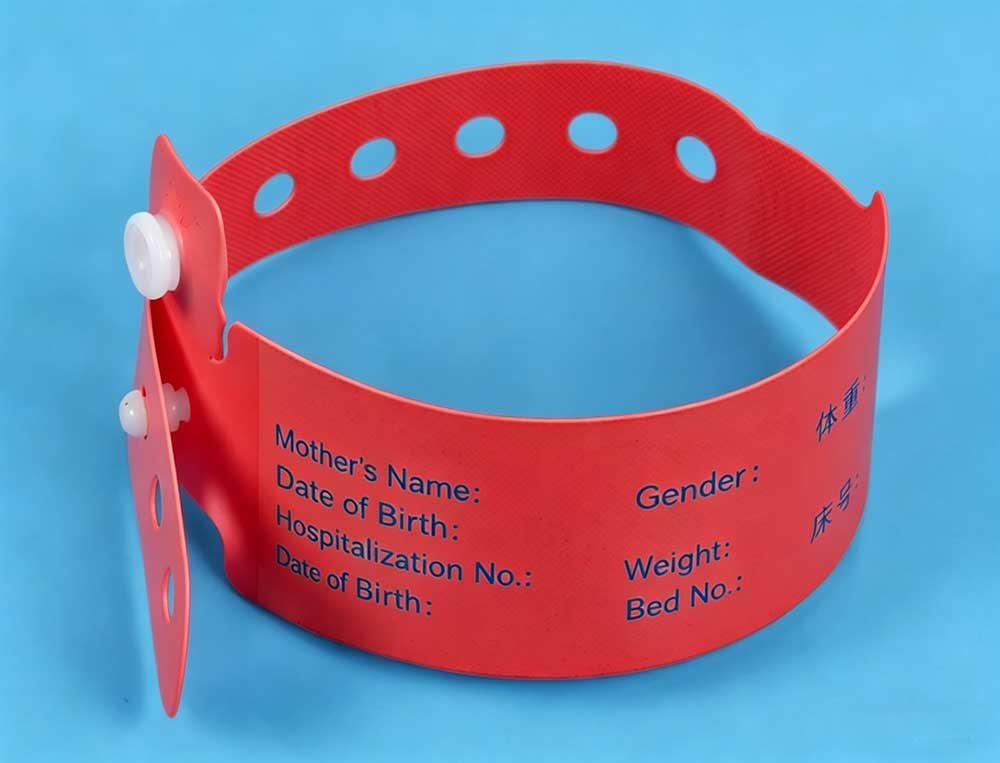
- Red Wristband: Red wristbands are commonly used to indicate allergy-related alerts. They help healthcare staff identify special precautions quickly.
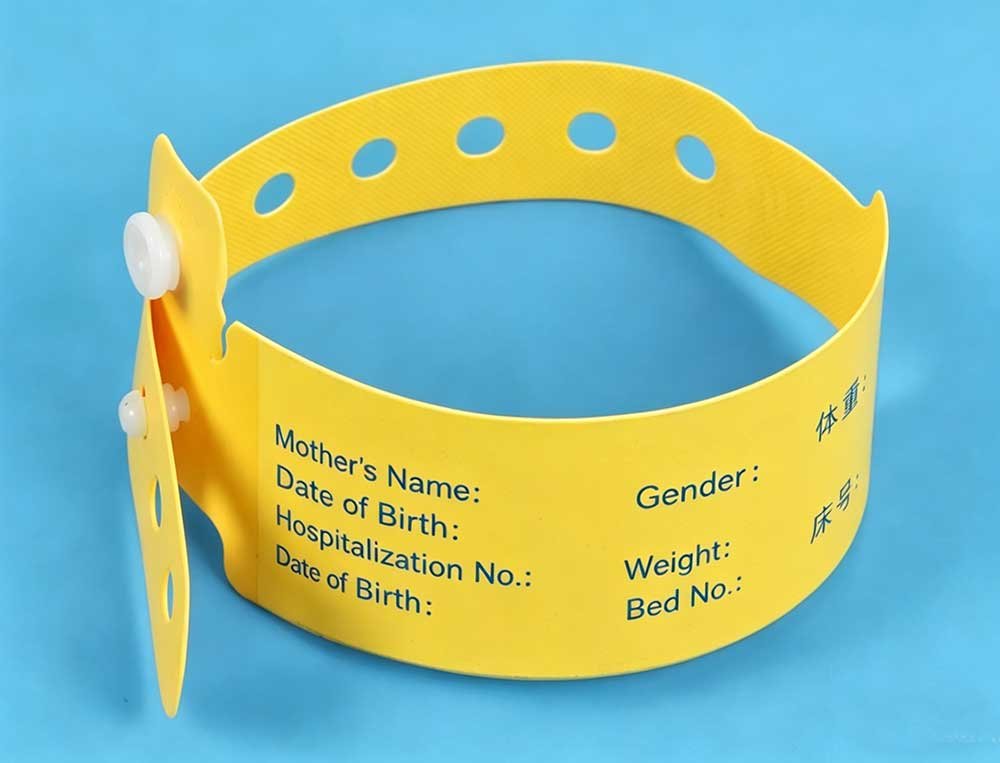
- Yellow Wristband: Yellow wristbands are often used to remind staff about patients who may need extra support or supervision while moving around.
- Purple Wristband: Purple wristbands are sometimes used for special care instructions and patient preference notices, depending on hospital policy.
- Green Wristband: Green wristbands are often associated with sensitivity-related reminders and help support material selection in care environments.
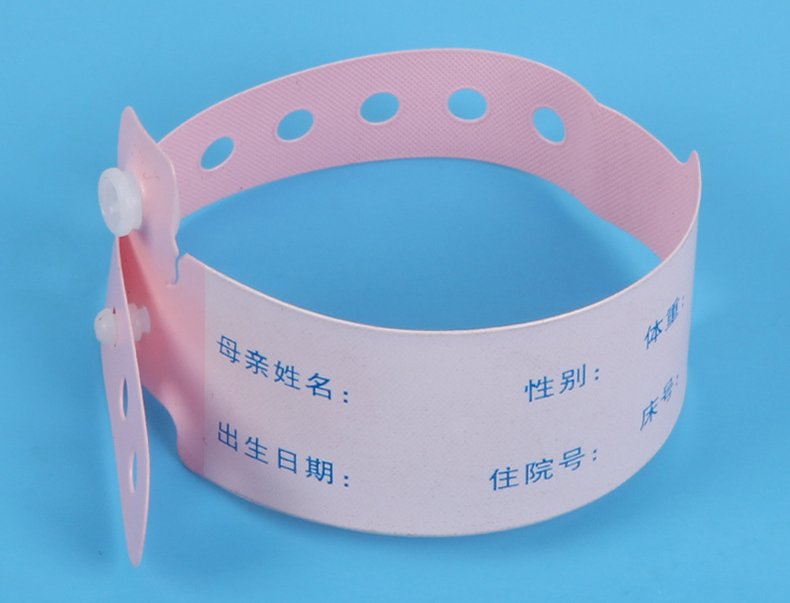
- Pink Wristband: Pink wristbands are often used to indicate that a specific limb or area should be handled with extra care.
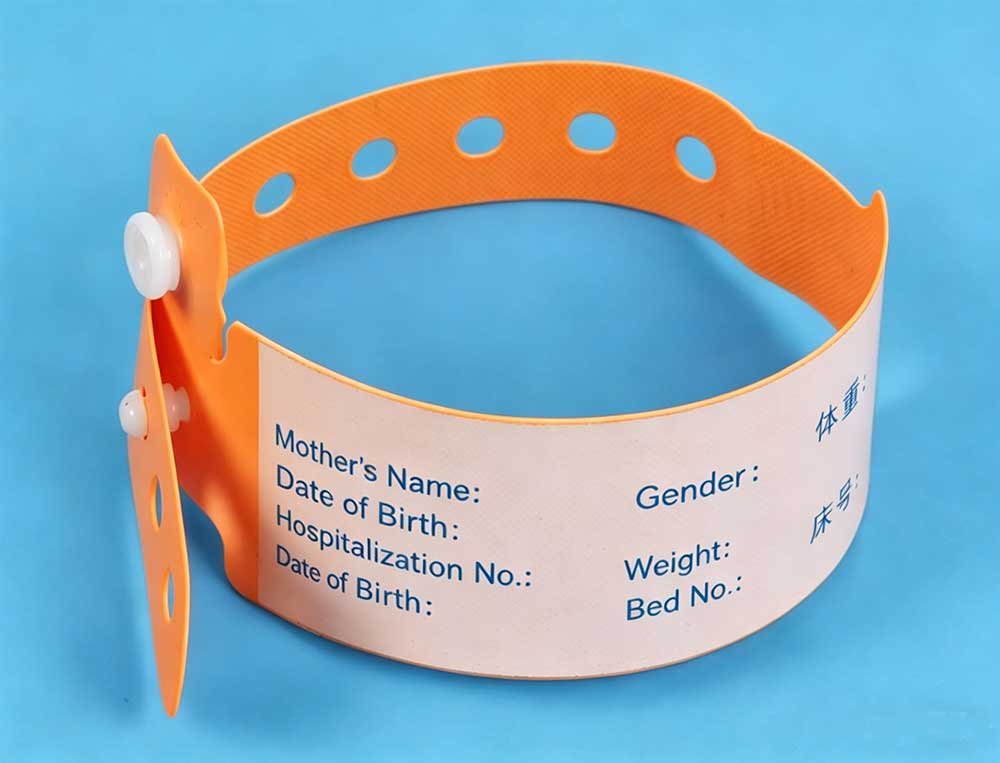
- Other Common Wristband Colors: In addition to the colors listed above, some hospitals also use white, blue, orange, or other colors for internal identification or workflow purposes.
The exact meaning may differ by hospital policy and local practice.
Display of Multi-Color Hospital Wristbands
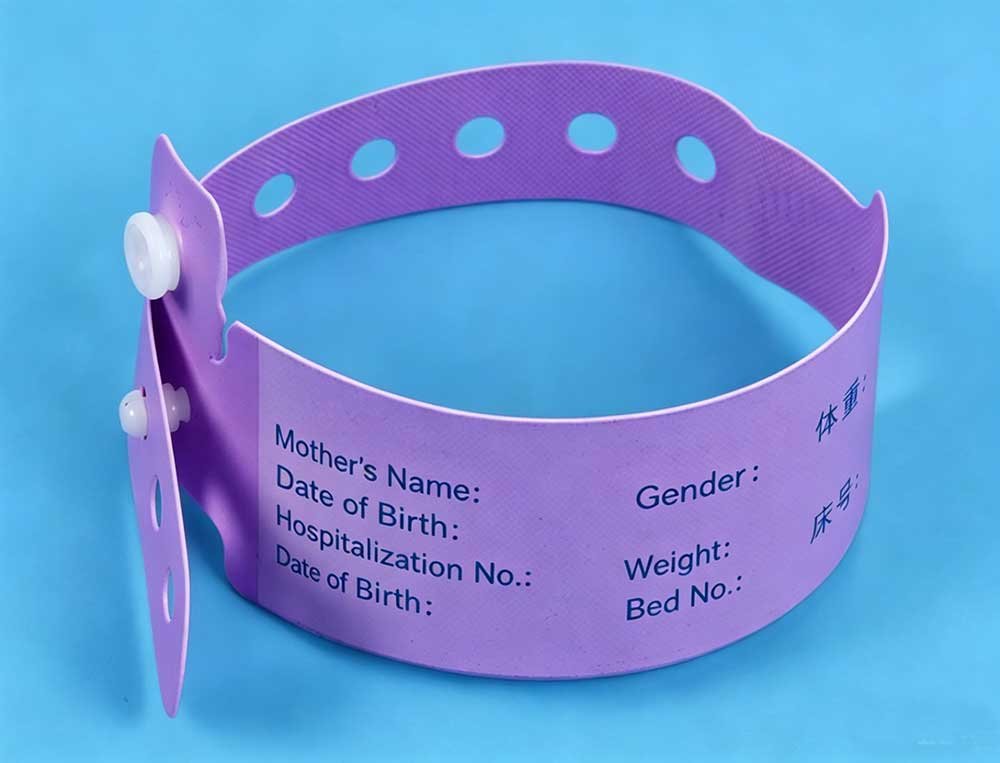
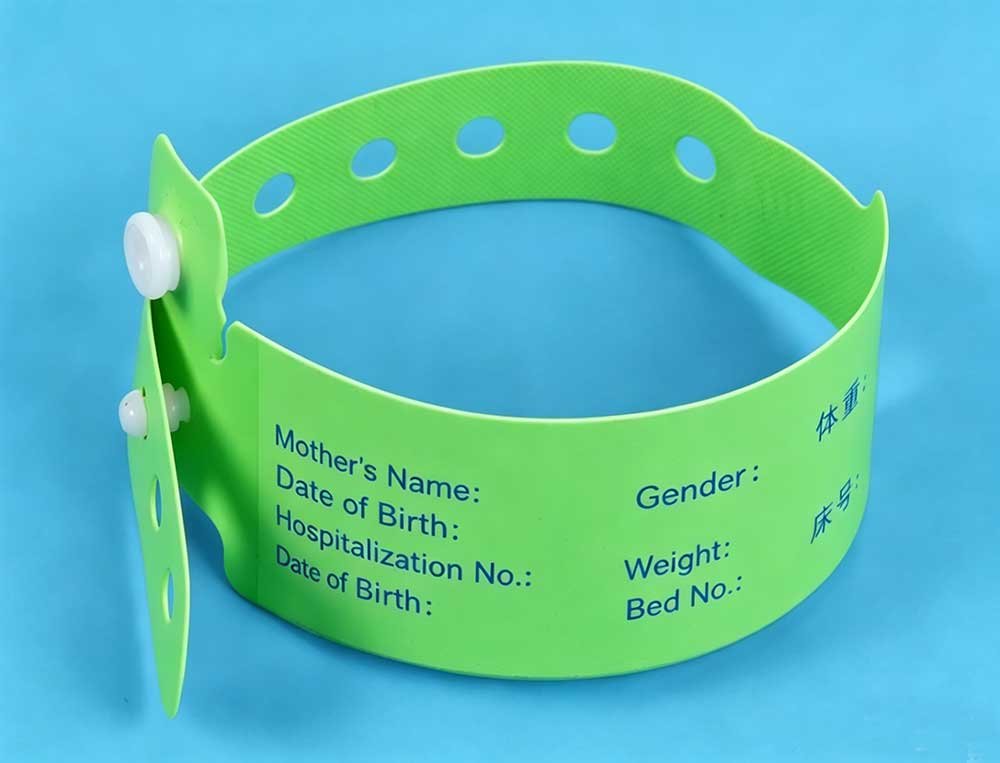
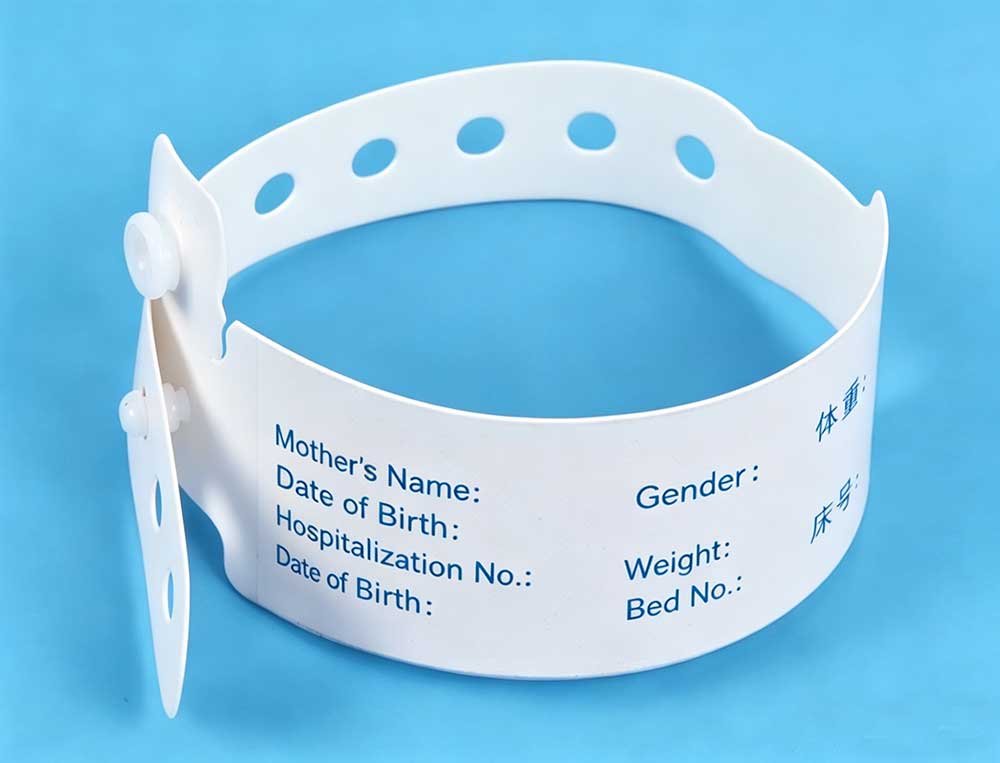
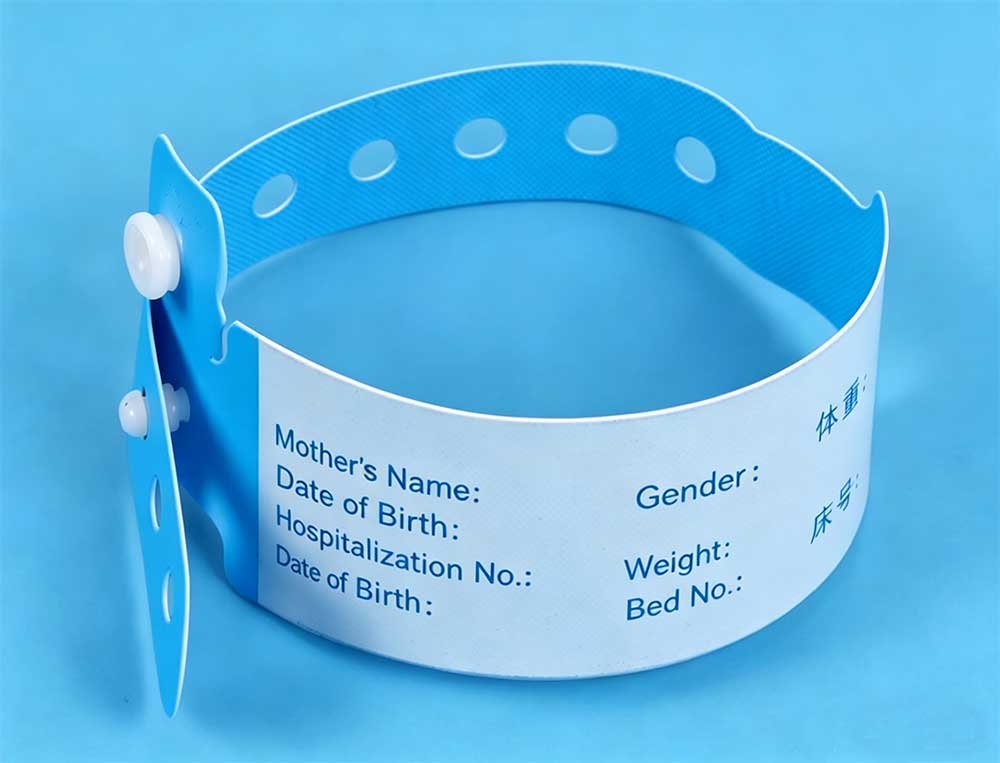
Is There a Global Hospital Wristband Color Standard?
There is no single mandatory global standard for hospital wristband colors. However, many healthcare facilities follow widely recognized color alert principles to improve patient safety and communication. Such as red, yellow, purple, green, and pink are commonly used in healthcare environments.
For this reason, hospitals often establish their own wristband color system based on internal policies, clinical workflow, and patient care needs.
If you are looking for custom hospital wristbands, choosing the right material, print method, and color system can help improve both workflow efficiency and patient care.
Reference
American Hospital Association (AHA)
Standardized Colors for Patient Alert Wristbands