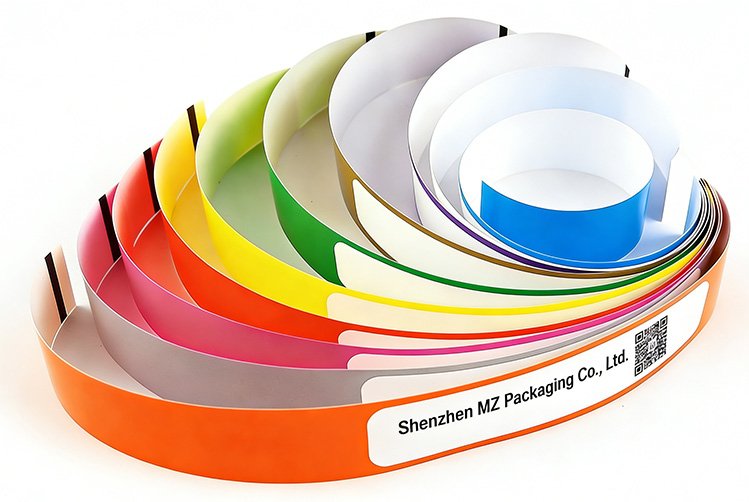
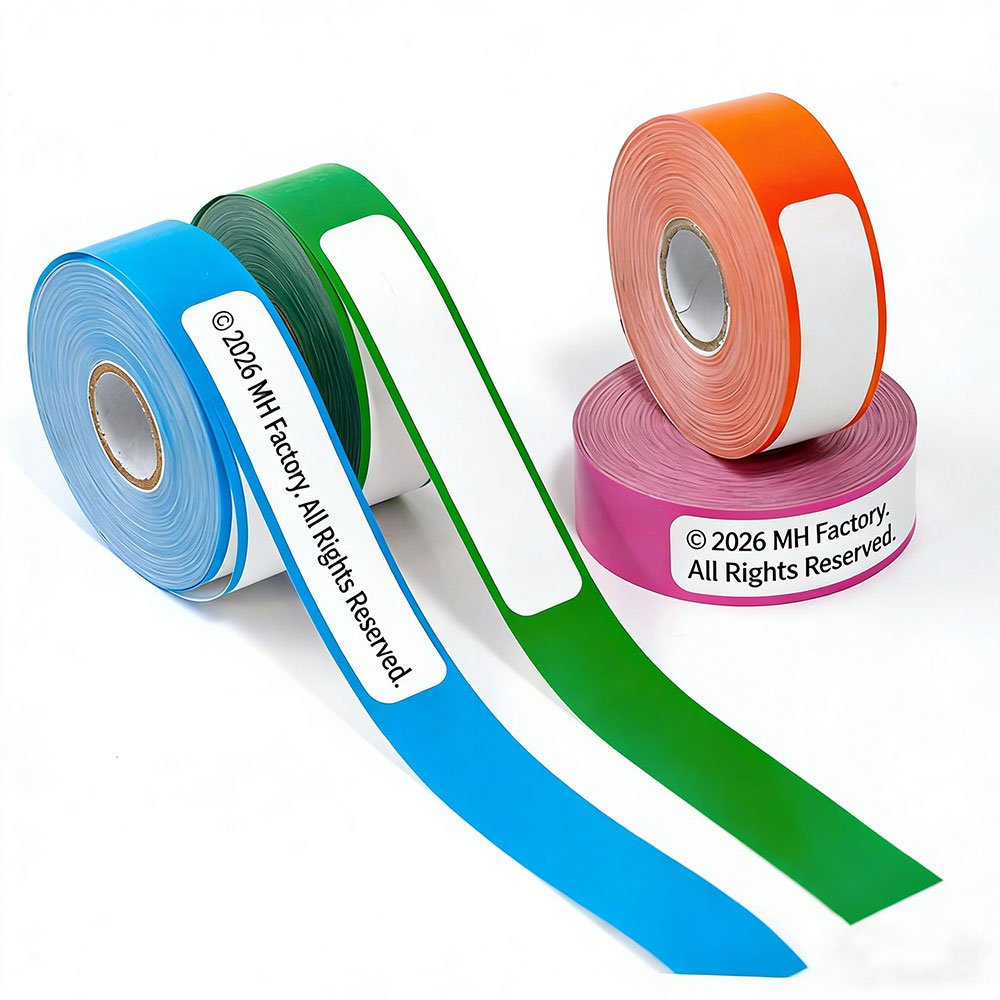
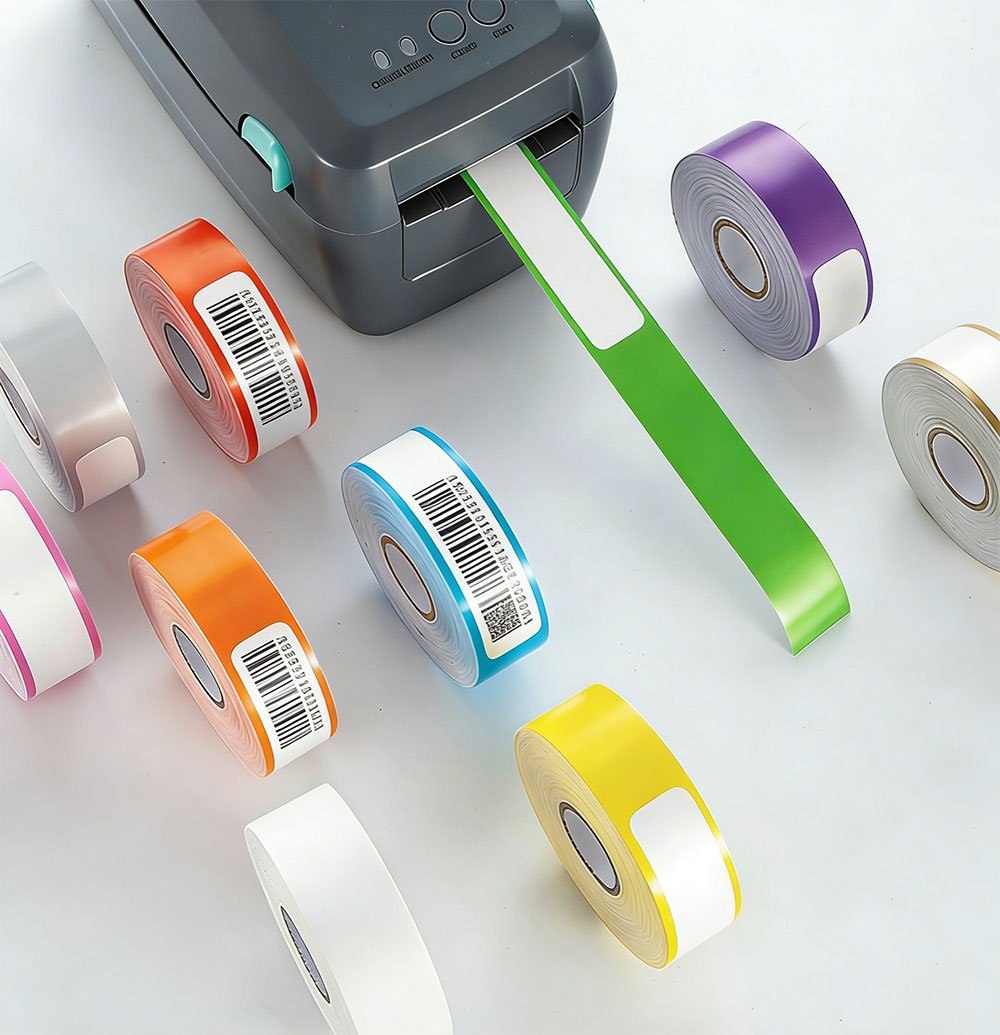
What Are Thermal Wristbands?

Thermal wristbands are disposable identification bands made for thermal printing. They are designed to print variable information at the point of use, helping organizations identify people quickly without handwritten records or pre-printed inventory.

Fast On-Demand Identification

Thermal wristbands allow names, IDs, barcodes, QR codes, dates, and admission details to be printed instantly without pre-printing or complex setup, helping teams process participants quickly at busy checkpoints.

One-Time Security Control

The tamper-evident adhesive closure supports single-use identification and helps prevent unauthorized reuse, identity substitution, and cross-entry between restricted areas.

Factory Customization Support

Yateli support custom sizes, adult/child/infant formats, logo printing, color background printing, variable data, roll packing, and printer-matched constructions for OEM and bulk buyers.

Thermal Wristbands at a Glance

Thermal wristbands are disposable identification bands designed for fast on-demand printing, one-time wear, and secure access control in healthcare, events, visitor management, and temporary registration workflows.

Thermal wristbands are widely used when organizations need to print variable information at the point of registration or admission without relying on manual handwriting or pre-printed stock.

Depending on the application, thermal wristbands can be produced as direct thermal wristbands or thermal transfer wristbands. Direct thermal models are ideal for short-term use and faster processing, while thermal transfer models provide better resistance to abrasion, sunlight, and longer wear periods.

Yateli is a professional thermal wristbands manufacturer in China, providing customized solutions for healthcare, events, visitor management, and other application scenarios. Contact us anytime to discuss your project requirements.

Request Sample

Thermal Wristband Overview

Why Thermal Wristbands Matter in Registration and Access Control

Thermal wristbands are valued for fast on-site printing, one-time wearability, and practical traceability in healthcare, events, and temporary identification workflows.

Fast Thermal Wristband Printing

Fast On-Demand Printing

Thermal wristbands eliminate the need for manual writing or pre-printed inventory. Users can print names, IDs, barcodes, QR codes, dates, and serial numbers instantly at the point of registration or admission.

Thermal wristbands support printing speeds of 120~150 mm/s, with a single wristband typically completed in 1.47~2.20 seconds. In practical high-volume workflows, this allows teams to process approximately 1636–2448 people per hour, depending on printer model, print content, and operator efficiency.

This makes them especially suitable for hospitals, exhibitions, concerts, visitor checkpoints, and any scenario where speed and accuracy matter.
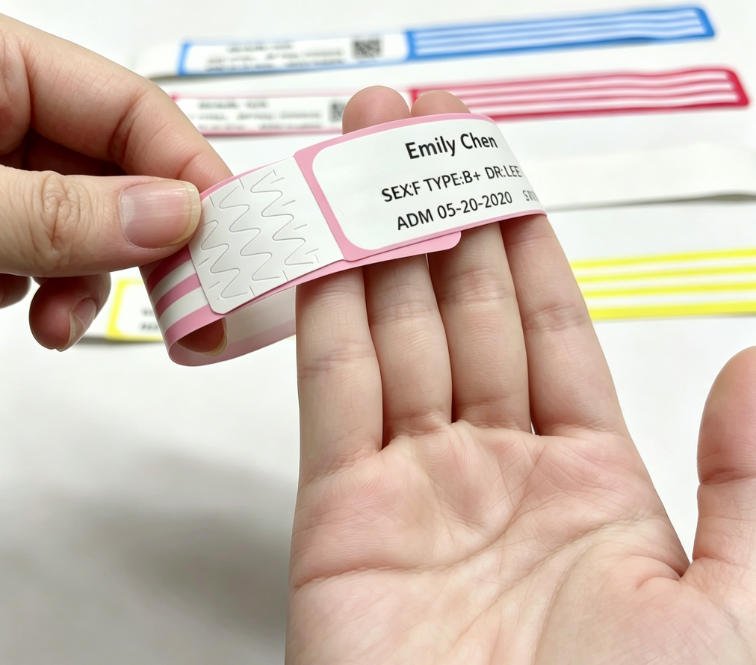

One-Time Security Thermal Wristbands

One-Time Security Control

The wristband uses a tamper-evident closure structure with a medical-grade pressure-sensitive adhesive, typically based on water-based acrylic or eco-friendly PSA technology. Once applied, the bond locks securely to the skin and cannot be removed and reused without visible damage, supporting single-use identity control and anti-counterfeit management in temporary access scenarios.

This is critical for admission control, restricted area access, patient safety, and any temporary identity management program that requires a secure visual identifier.

Thermal Wristband Applications

Lower Administrative Cost and Better Traceability

Compared with handwritten bands, plastic cards, or manual sign-in sheets, thermal wristbands deliver a faster and more reliable identification workflow. A complete per-person check-in process, including information input, printing, and wristband application, typically takes only 8–12 seconds. In high-volume operations, this supports throughput of approximately 1636–2448 people per hour, while reducing error rates by more than 92% and improving on-site handling efficiency by 65%+ compared with manual methods.

They also support barcode and QR code printing for scan-based verification, digital logging, and later data review in healthcare and event environments.

Thermal Wristbands Basic Structure

A structural breakdown of the main printing, fitting, and anti-tamper zones found on common thermal wristbands and thermal wristband roll products.

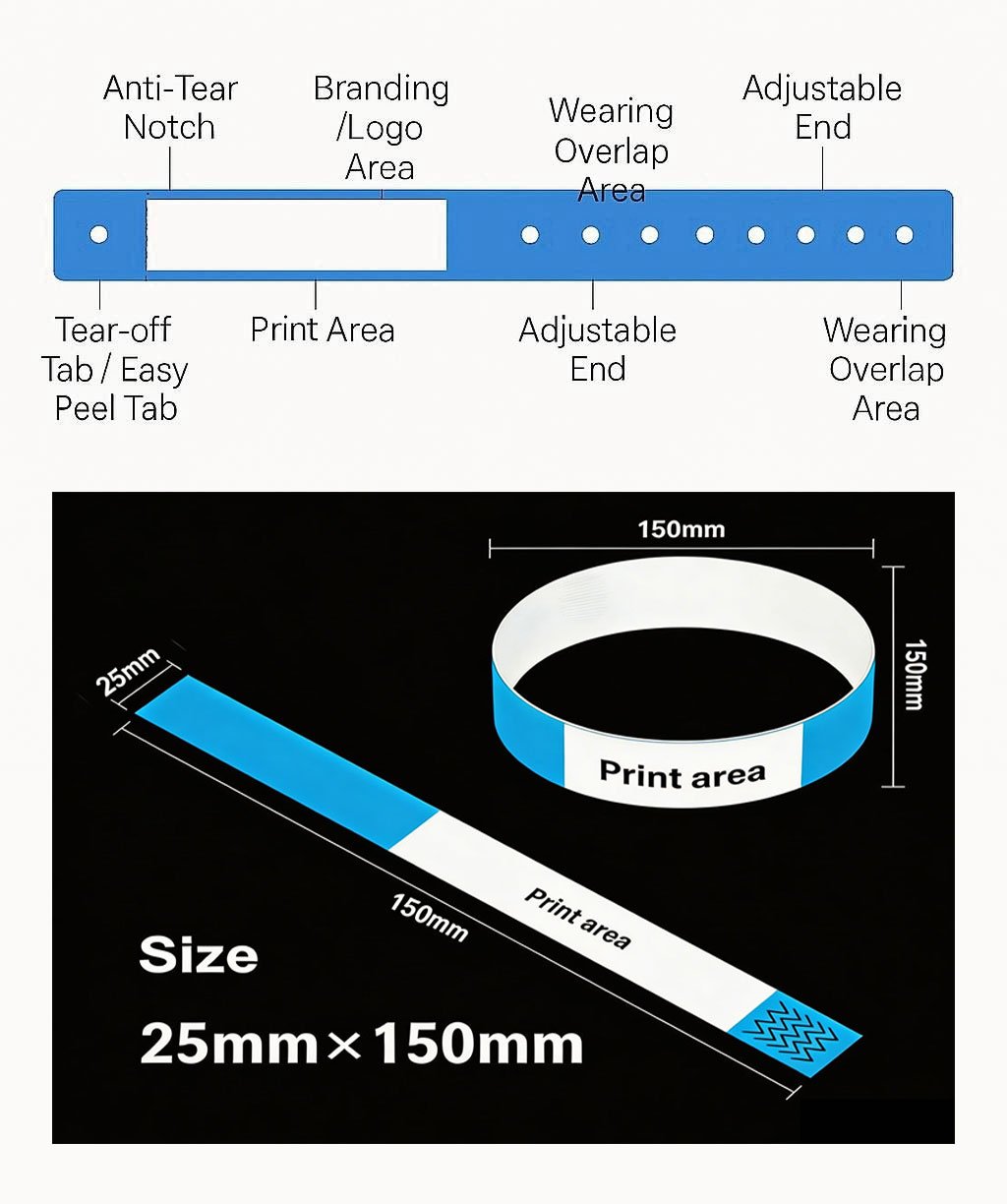
Thermal Wristband Structure Reference

Print Area The white print zone used for patient information, barcodes, and QR codes.

Adjustment Holes A row of round holes at the tail end used to adjust fit for different wrist sizes.

Fixed End The end with the buckle or locking point that secures the wristband during wear.

Adjustable End The perforated end that passes through the fixed end to set the wristband length.

Wearing Overlap Area The overlapping zone created when both ends are fastened or pasted together.

Anti-Tear Knife Pattern / Notch A serrated or notched design near the fixed end that helps prevent tampering and forced tearing.

Branding / Logo Area The area used for brand marks, hospital names, or certifications such as SGS.

Tear-off Tab / Easy Peel Tab A small protruding tab that makes it easier to peel release paper or separate the wristband during application.

Perforation Line The tear line between roll-packed wristbands that allows single-band separation.

Black Mark / Sensor Mark A black registration mark on the back of roll-format wristbands used for printer sensor positioning.

Having gained a preliminary understanding of the thermal wristband structure, we will next introduce its working principle.

Thermal Wristbands Basic Structure

How Thermal Wristbands Work

A simple explanation of thermal coating, print-head heating, and the difference between direct thermal and thermal transfer printing.

Thermal wristbands use a heat-reactive coating that turns dark when exposed to controlled heat from the printer head. In direct thermal printing, the print head applies heat directly to the coated surface, so no ribbon is required. This makes the process simple, fast, and cost-efficient.

In thermal transfer printing, the printer uses a ribbon to transfer ink onto the wristband surface. This adds an extra consumable, but it also improves print durability, abrasion resistance, and resistance to sunlight or longer display periods.

The result is a clear, machine-readable wristband that can display names, IDs, barcodes, QR codes, and visual branding in real time at the point of use.

For technical reference, Zebra explains that direct thermal printing uses heat-sensitive media without a ribbon, while thermal transfer printing uses a ribbon to transfer material onto the media surface. Read the official print method guide.

To help you better understand, we have made a brief comparison between direct thermal wristbands and thermal transfer wristbands. Please read below.

How Thermal Wristbands Work

Direct Thermal vs Thermal Transfer Wristbands

Choose the right printing method based on wear duration, print stability, and environmental exposure.

Item Direct Thermal Thermal Transfer
Ribbon Required No Yes
Cost Lower Higher
Durability Short-term Medium to long-term
Heat and UV Resistance Basic Stronger
Best For Events, admissions, temporary registrations Healthcare, outdoor use, longer wear periods

Direct thermal wristbands are the mainstream option for fast and economical identification. Thermal transfer wristbands are preferred when print durability, abrasion resistance, and longer display stability are required.

Next, we will further introduce the specific features of thermal wristbands.

Key Features of Thermal Wristbands

A quick overview of the product characteristics that make thermal wristbands practical for healthcare, events, and temporary identification programs.

Fast On-Site Printing

Thermal wristbands are designed for instant variable-data printing, helping teams produce names, IDs, barcodes, and QR codes at the point of registration or admission.

Tamper-Evident One-Time Use

The adhesive closure supports single-use wear and visible damage on removal, helping prevent reuse, transfer, and identity substitution.

Lightweight and Comfortable

Flexible substrate options and skin-friendly adhesives make thermal wristbands comfortable for short-term wear without the stiffness of rigid plastic alternatives.

Water and Sweat Resistance

Thermal wristbands can be made with waterproof or laminated finishes to improve performance in humid, outdoor, or high-activity environments.

Tear Resistance and Toughness

Even under strong pulling force, thermal wristbands are difficult to tear cleanly, helping maintain one-time use integrity and reduce accidental breakage during application.

Alcohol-Resistant Print Stability

Even when the wristband surface is exposed to alcohol, the printed text can remain legible after wiping, helping preserve identification clarity in medical and hygiene-sensitive settings.

Skin-Friendly and Hypoallergenic

Made with soft, lightweight materials and skin-friendly adhesive options, thermal wristbands are designed to be gentle on the skin, breathable, and comfortable for short-term wear.

Clear Machine Readability

Sharp thermal printing helps maintain barcode and QR code readability for scanning, reporting, and access verification workflows.

Customizable Formats

Adult, child, and infant sizes, as well as custom colors, logos, and roll formats, can be tailored to your application requirements.

The excellent advantages of thermal wristbands mainly depend on their materials and technologies, as follows:

Material Structure of Thermal Wristbands

A multi-layer structure designed for print performance, skin comfort, adhesive reliability, and efficient release.

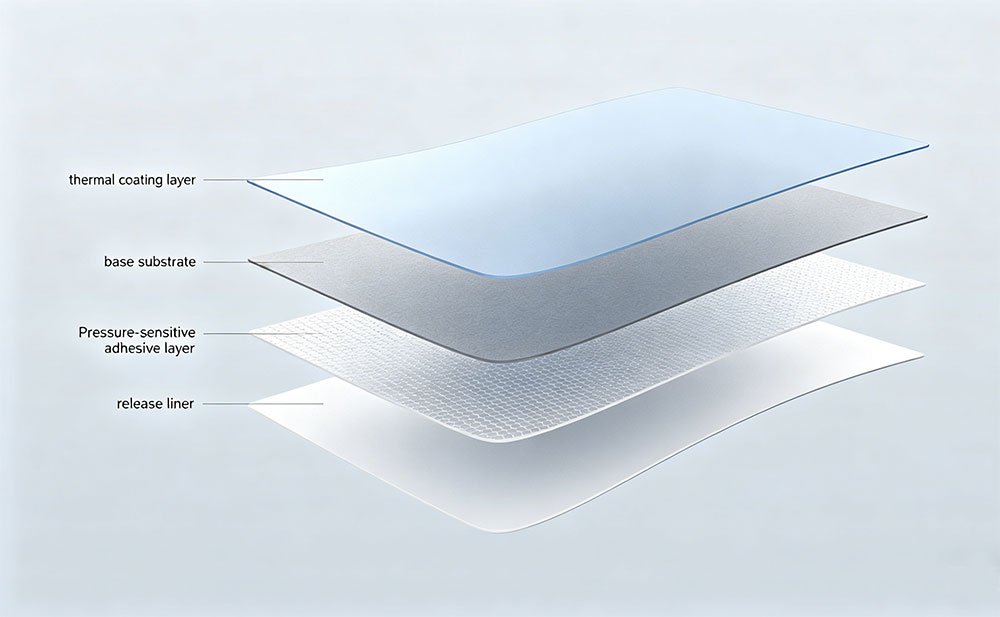
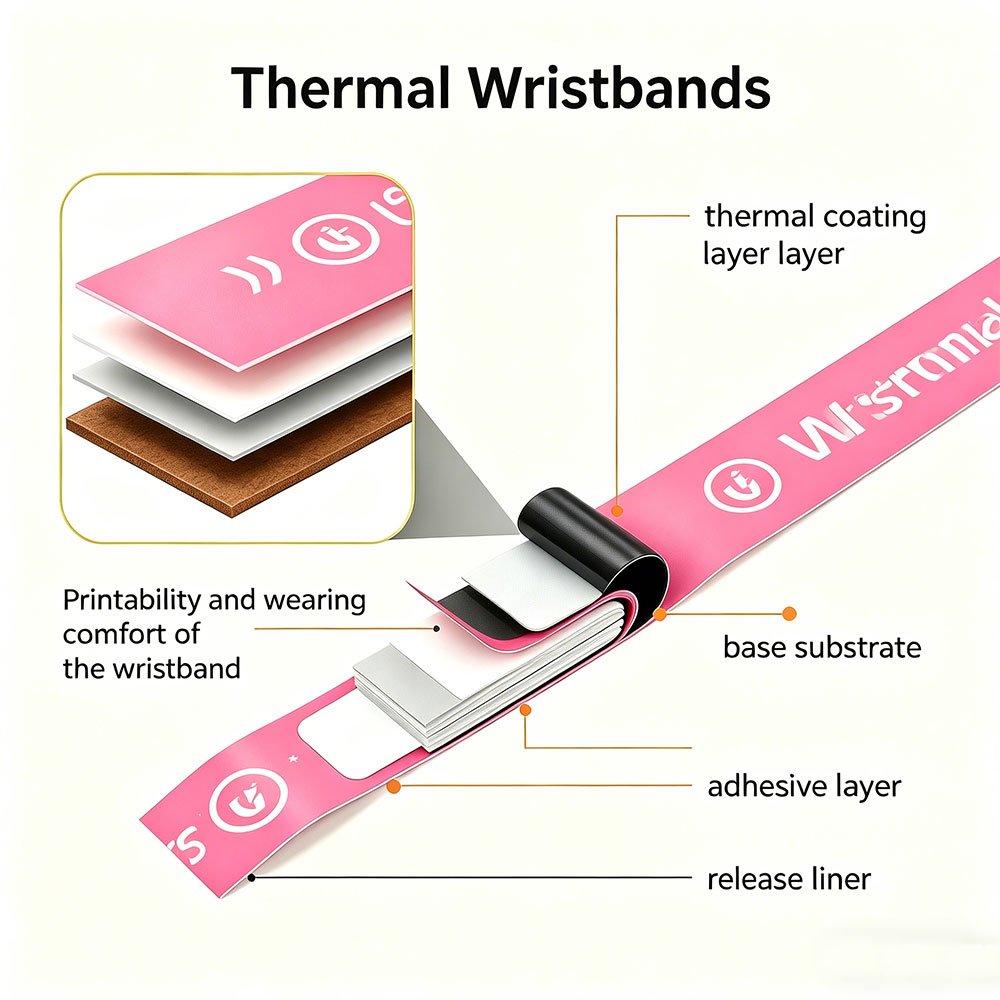
Thermal wristbands are generally made of a thermal coating layer, a base substrate, a pressure-sensitive adhesive layer, and a release liner. Each layer contributes to print clarity, adhesion strength, wear comfort, and tear resistance.

The surface coating reacts to heat from the print head and creates the visible image. The base layer determines the overall stiffness, tear resistance, and water resistance. The adhesive layer must provide secure bonding without causing excessive skin irritation, and the release liner supports smooth peeling and application.

Common base materials include premium synthetic PP/PE paper for stronger durability, standard thermal coated paper for cost-sensitive programs, and nonwoven composite structures for soft-touch, economical applications.

Thermal Wristband Material Structure

Thermal Wristbands Standard Sizes and Technical Specifications

Common dimensions and technical references for procurement, integration, and custom production planning.

Specification Adult Child Infant
Typical Size Approx. 255–280 mm length Approx. 180–220 mm length Approx. 120–160 mm length
Width Commonly 19–25 mm Commonly 19–25 mm Commonly 19–25 mm
Print Area Customizable Customizable Customizable
Packing Format Roll / sheet / box Roll / sheet / box Roll / sheet / box

All sizes, print windows, adhesive systems, and roll formats can be customized according to your printer model and project requirements.

What Can Be Printed on Thermal Wristbands

Common print content examples for patient identification, event admission, visitor tracking, and branded promotional use.

Identity Data

Patient name, guest name, staff name, visitor ID, admission number, department, and room or zone reference.

Machine-Readable Data

1D barcodes, 2D barcodes, QR codes, serial numbers, and variable numeric sequences for scan-based verification.

Branding Content

Logos, slogans, event names, color accents, sponsor marks, and custom visual identity elements for brand presentation.

Thermal wristbands can combine operational information and branding in one printed surface, making them suitable for both identification and promotional use.

Storage, Printing, and Wearing Conditions

Recommended environmental conditions to protect print quality, adhesive performance, and user comfort.

Storage Conditions

Store unprinted wristbands in a sealed package in a cool, dry place. Recommended storage temperature is 10–30°C to reduce premature darkening, adhesive aging, and liner damage.

Printing Conditions

Best printing performance is typically achieved at 18–28°C with moderate humidity. Extremely low or high temperatures may affect print darkness, feeding stability, and image sharpness.

Wearing Conditions

Thermal wristbands are designed for short-term body contact use. They are suitable for normal indoor and outdoor activities, but long exposure to extreme heat, steam, or repeated alcohol wiping may reduce print life.

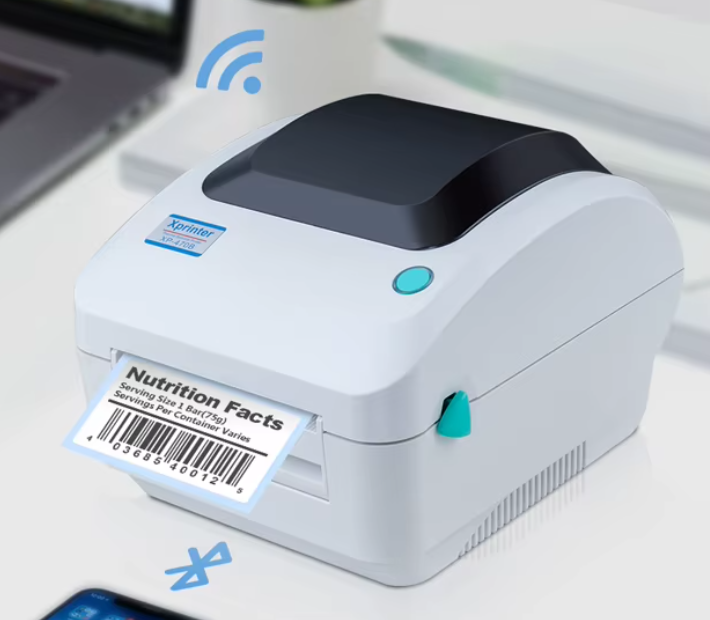
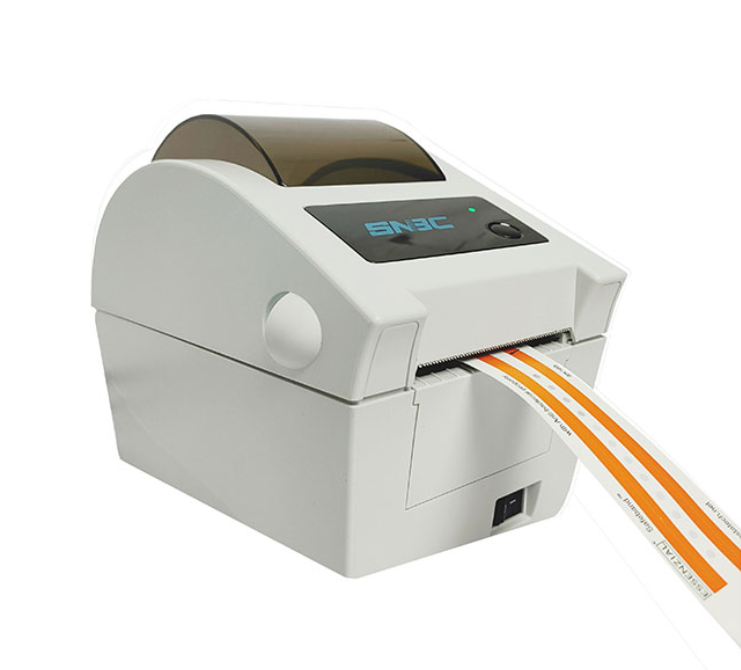
Compatible Thermal Wristband Printers

Choose the correct printer based on whether your project uses direct thermal or thermal transfer printing.

Direct Thermal Printers

Direct Thermal Printer Compatibility

  • Zebra: GK420d, ZD420d, ZD220d, ZD510-HC
  • TSC: DA210, TDP-247, TDP-324
  • Honeywell: PC42d, DT42d
  • Brother: TD-2020, TD-2120N
  • Other popular desktop and portable direct thermal models

Direct thermal wristbands use the print head to activate the thermal coating directly, so no ribbon and no ribbon take-up system are required.

Thermal Transfer Printers

Thermal Transfer Printer Compatibility

  • Zebra: GK420t, ZD420t, ZT230, ZT410
  • TSC: TA210, TTP-247, TTP-345
  • Honeywell: PC42t, PM42
  • SATO: CL4NX, CG408TT
  • Other ribbon-based desktop and industrial printers

Thermal transfer printing requires a compatible ribbon system and is preferred for higher resistance to smudging, handling, and longer wear cycles.

As a simple rule, models with a “D” suffix usually support direct thermal printing, while models with a “T” suffix usually support thermal transfer printing.

Thermal Wristbands vs PVC, Silicone, and RFID Wristbands

A practical comparison to help buyers choose the most suitable wristband system for cost, durability, comfort, and traceability.

Item Thermal Wristbands PVC / Silicone / RFID Wristbands
Cost Lowest for high-volume use Higher, especially for RFID systems
Printing Flexibility Excellent for variable data printing Often requires pre-production customization
Durability Best for short-term to medium-term use Higher for long-term wear
Comfort Lightweight and soft-touch Varies by material, often thicker
Traceability Barcode and QR code based RFID supports electronic data capture

If you need a cost-efficient disposable identification solution, thermal wristbands are usually the best choice. If you require long-term electronic tracking, RFID wristbands may be more appropriate.

How to Choose the Right Thermal Wristbands

A practical selection guide based on wear duration, print durability, environment, printer type, and identification workflow.

Best for Short-Term Use

You need the fastest and lowest-cost option for short-term use, same-day registration, admissions, or controlled indoor applications where ribbon-free printing is preferred.

Best for Longer Wear

You need longer print life, better resistance to abrasion, handling, sunlight, or repeated contact, especially for healthcare, outdoor, or extended-use workflows.

Best for the Right Size and Format

You need adult, child, or infant sizes, a specific adhesive feel, a wristband roll format, or a branded design that matches your event or facility standard.

If you are unsure which thermal wristband structure is right for your project, send us your usage scenario, printer model, and expected wear time. We will recommend the most suitable construction.

Where Thermal Wristbands Are Used

A versatile identification solution for healthcare, events, admissions, public control, and service environments.

Healthcare

Hospital patient identification, newborn wristbands, emergency triage, nursing care, and medical aesthetics registration. Durable thermal print wristbands for patient identification help reduce misidentification risk and improve traceability.

Events and Admissions

Exhibitions, conferences, concerts, music festivals, marathons, amusement parks, and water parks. Thermal print wristbands for events support fast entry processing and anti-transfer control.

Public and Temporary Control

Quarantine management, site visitor registration, exam room access, and temporary personnel identification. Admission thermal wristbands offer a simple, low-cost visual control method.

Hospitality and Services

Hotel breakfast access, club or venue consumption tracking, and temporary membership control. Thermal print wristbands for branding can also support logo presentation and color differentiation.

Special Use Cases

Thermal wristband for hot flashes, thermal wristband for exhibitions, and other niche projects that require fast temporary identification and easy application.

Branding and Promotion

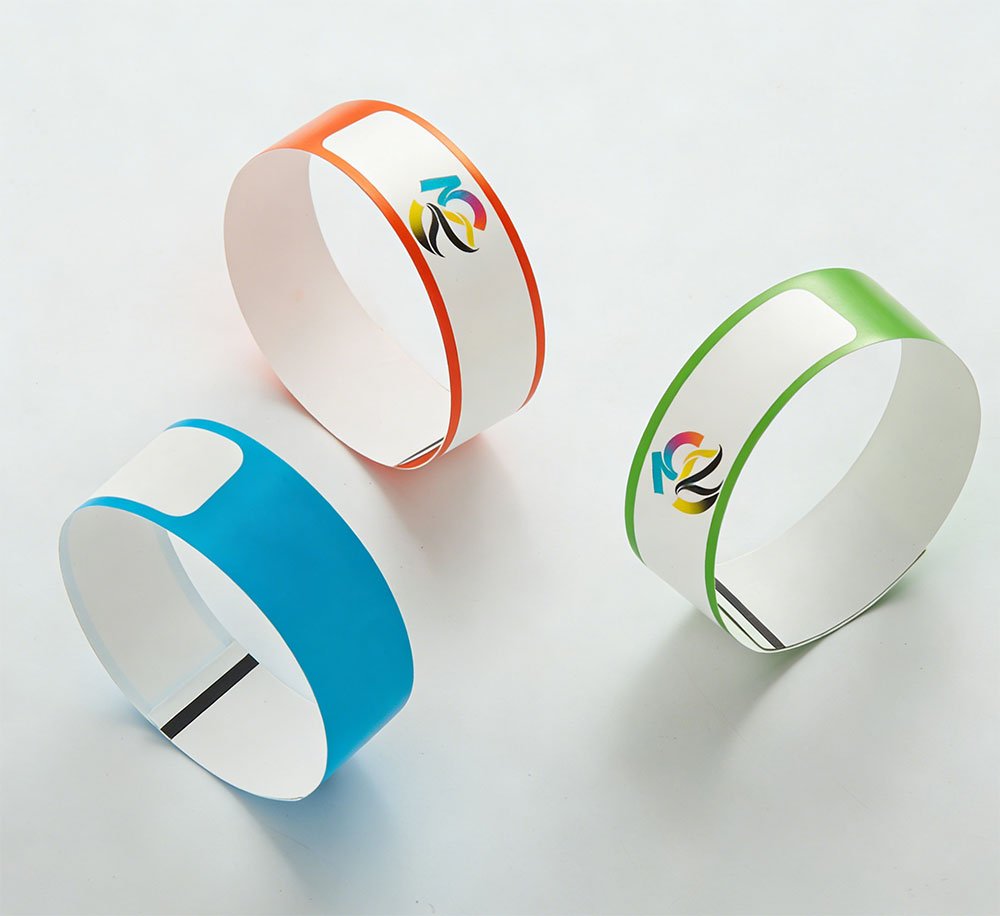
For buyers who want branded admission products, thermal printed wristbands can be customized with logos, slogans, colors, and event-specific graphics.

Visual Guides and Reference Images

Reference visuals to help you understand structure, print method, sizing, process flow.

Thermal Wristband Cross Section Diagram

Thermal Wristbands Structure Cross-Section Diagram

Thermal wristbands feature a well-structured layered cross-section, consisting of thermal coating, base substrate, adhesive layer and release liner. This engineered layered design balances outstanding print performance, stable adhesive bonding and skin-friendly comfort, helping you clearly understand our product’s internal construction and functional advantages.

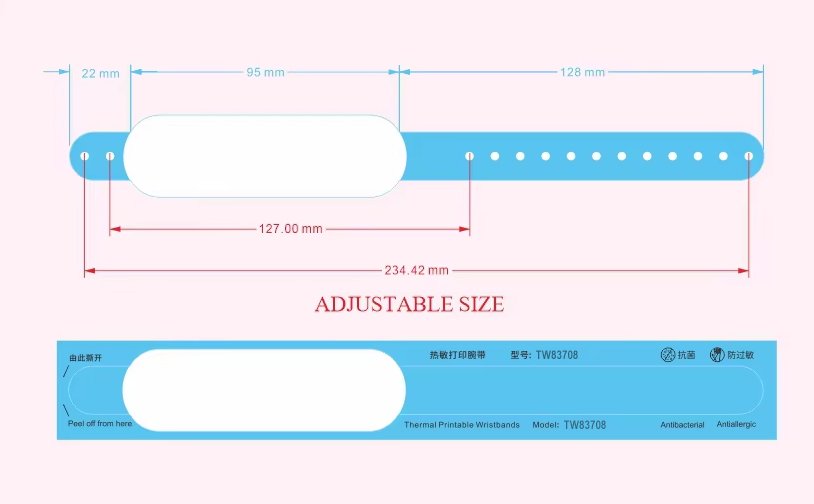
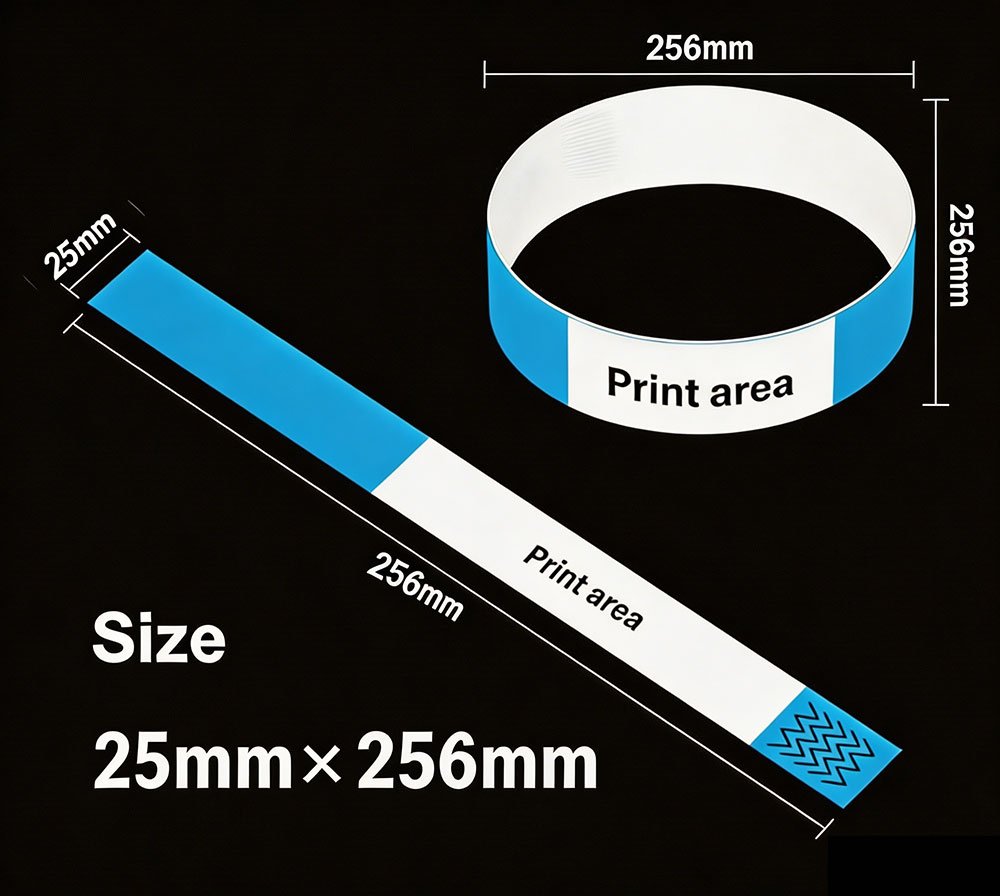
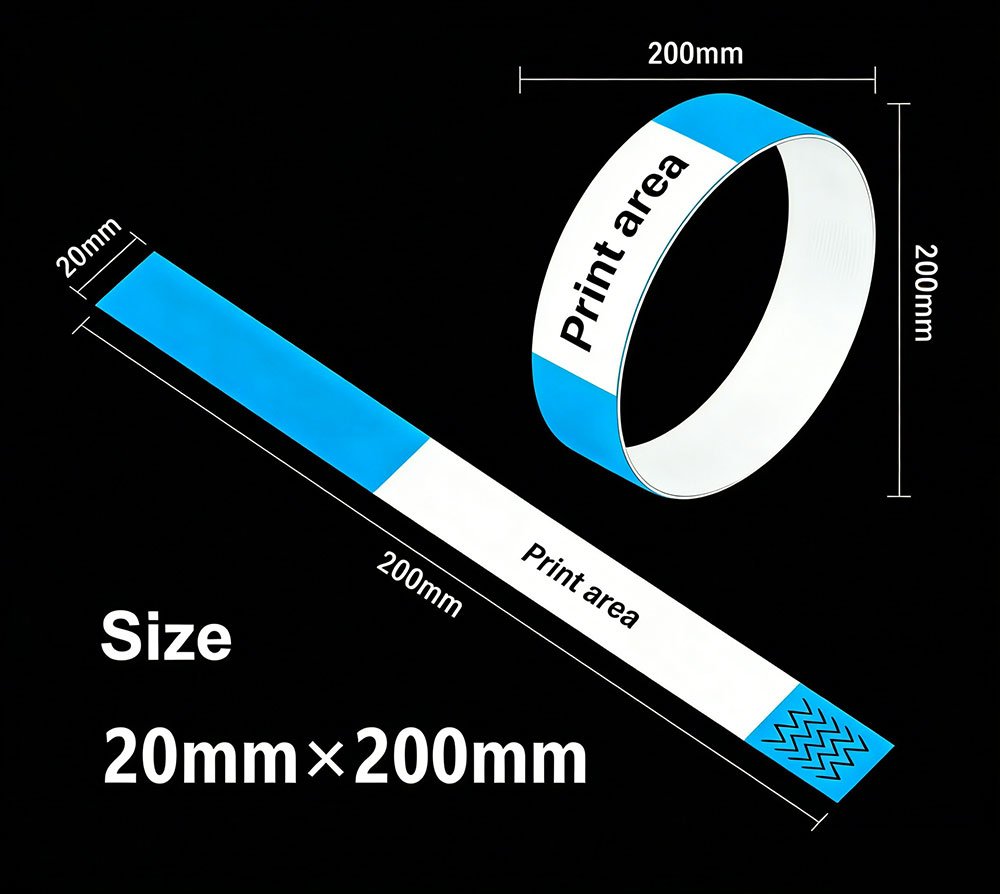
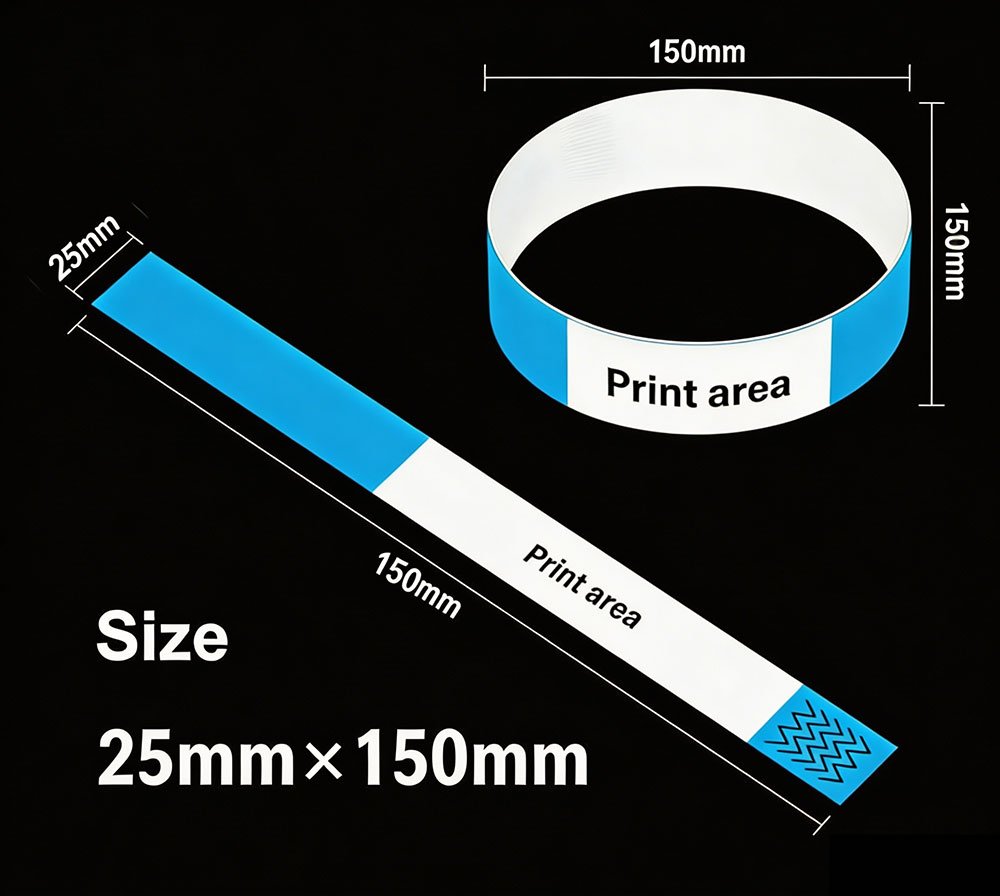
Adult Thermal Wristband Size 25 x 256 mm

Thermal Wristband Size Diagram and Dimension Guide

Complete size specifications for adults, children and infants are presented with intuitive sizing diagrams and clear print area markings. This detailed dimension reference enables you to quickly select properly fitted wristbands to perfectly match your targeted user groups and application scenarios.

Adult Thermal Wristband 25 x 256 mm Child Thermal Wristband 20 x 200 mm Infant Thermal Wristband 25 x 150 mm
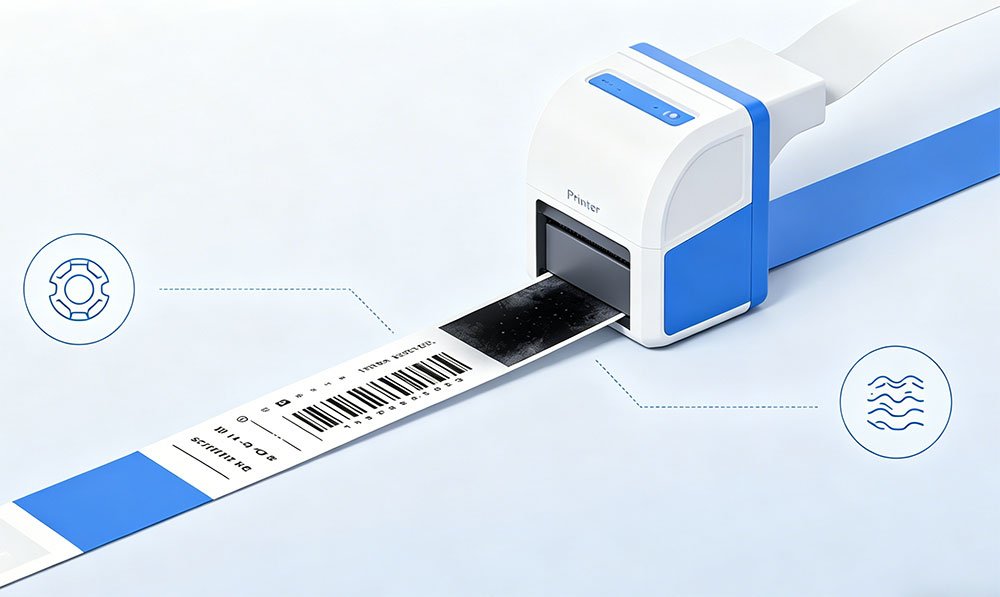
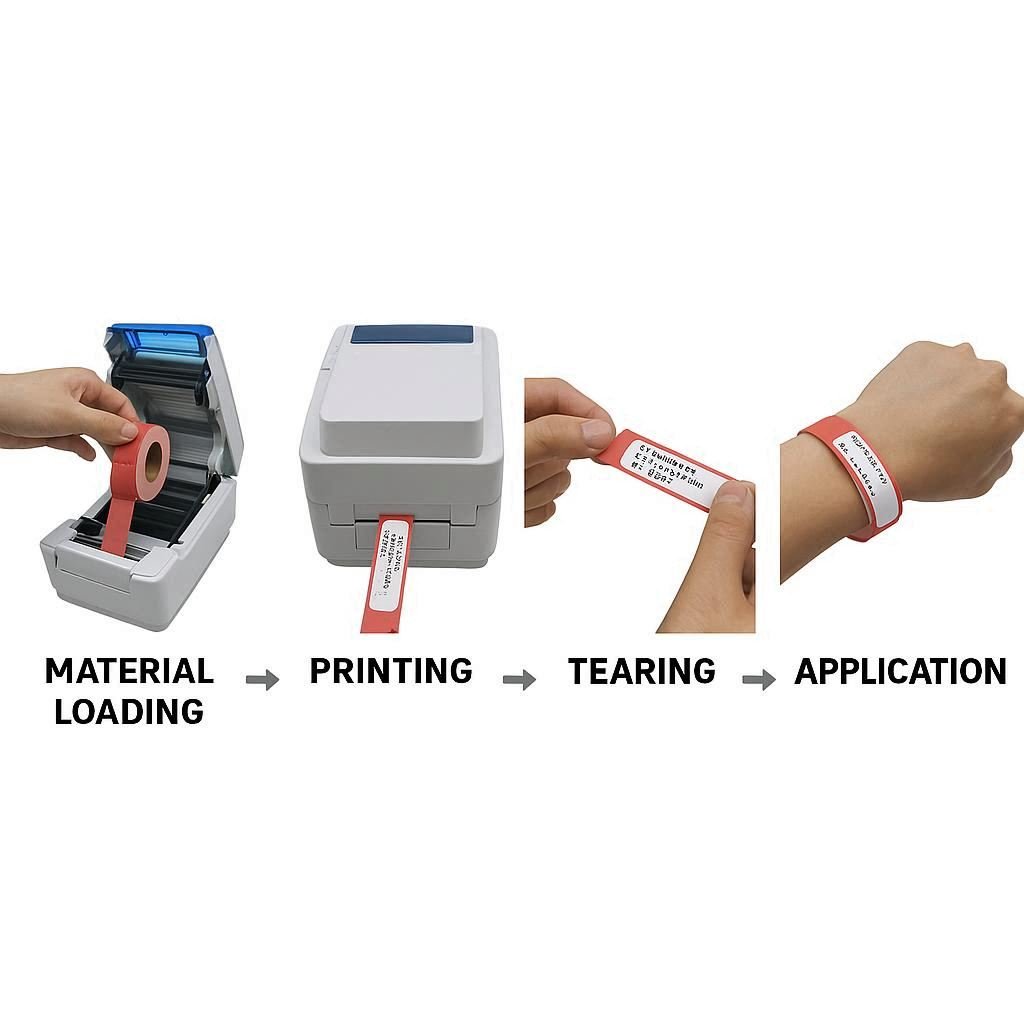
Thermal Wristband Printing Process

Thermal Wristband Printing Process Flow

Illustrates the complete operational steps including material loading, printing, tearing and application, letting you easily understand the full workflow at a glance.

Watch How Thermal Wristbands Are Manufactured

This short video shows the factory production and converting process for thermal wristbands.

It is a quick way to see how a thermal wristband roll is transformed into a finished disposable identification product ready for healthcare, events, and admission control applications.

Custom Thermal Wristbands for OEM and Private Label Buyers

Flexible customization for factories, distributors, healthcare suppliers, and event solution providers.

We support blank stock, logo-printed wristbands, variable-data printable wristbands, and color-customized products. For OEM buyers, we can align product construction with your printer model, application environment, and target market requirements.

Custom options include size, width, adult/child/infant format, adhesive strength, water resistance level, print area, barcode or QR code content, numbering systems, roll packing, and branded outer packaging.

If you need a disposable thermal wristband for short-term use or an RFID thermal wristband concept for hybrid identification workflows, our engineering team can evaluate the right substrate and manufacturing structure for your project.

Custom Thermal Wristbands

Why Buyers Choose Our Thermal Wristbands

Print Clarity
Stable thermal coating and application-matched materials help produce sharp text, readable barcodes, and high QR code recognition rates for registration and admission workflows.

Comfort and Wearability
Lightweight structures, skin-friendly adhesive options, and flexible substrates support comfortable short-term wear without the stiffness of rigid plastic alternatives.

Security and Traceability
One-time adhesive closure, variable numbering, and scan-based data capture support identity control, attendance tracking, and access management.

Cost Efficiency
Thermal wristbands are a lower-cost alternative to PVC, silicone, and RFID wristband systems for short-term identification programs and large-volume use.

Customization Flexibility
We support OEM branding, color background design, and project-specific formats, making the product suitable for both standard supply and private label distribution.

Frequently Asked Questions

1. Why do thermal wristbands become blurry in summer?

When thermal wristbands are used above 45°C with high humidity, the print head may overheat and the thermal coating may react too strongly, causing blur or darkening. For better results, reduce print speed or head temperature and keep the printing area cool.

2. Why don’t thermal wristbands stick well in winter?

When a disposable thermal wristband is applied in temperatures below 0°C, adhesive performance may decrease. Let the wristbands return to room temperature before use, then press firmly for about 10 seconds after application.

3. What should I pay attention to during cross-border transportation?

During shipping, a thermal wristband roll or packed thermal wristbands may be exposed to container temperatures as high as 60°C in summer. Use insulated packaging and desiccant to help prevent premature darkening or print quality issues.