Yateli - Professional Outdoor Anti-Slip Tape Manufacturer

Anti-slip tape is a coated laminate, not a printed label. The top-coat, the carrier, the adhesive and the liner are all specified against the same service life.

Coating Control

Grit density, binder chemistry and coat weight are fixed on the coating line, upstream of converting. Anti-slip performance and weathering performance are therefore decided in one pass and do not have to be traded against each other.

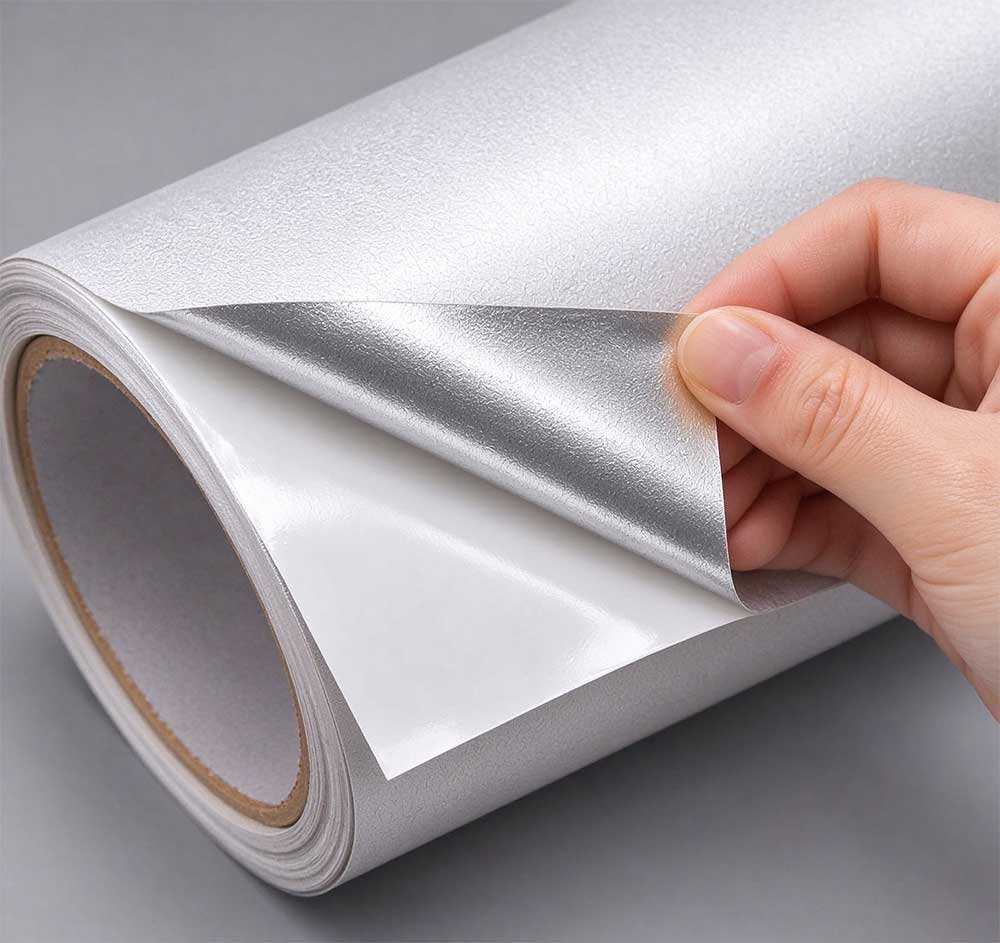
Forged Aluminium Carrier

Forged foil has a denser grain structure than rolled foil. It survives repeated day-night expansion cycles on exposed substrates without flex-fatigue cracking, and it holds a defined shape over uneven masonry.

Sampling and Supply

Standard grades ship without waiting for a compound order. Samples take three to five days, repeat production ten to fifteen, with roll length and packaging matched to how the project will consume the material.

The advantages of the forged aluminum foil anti-slip strips

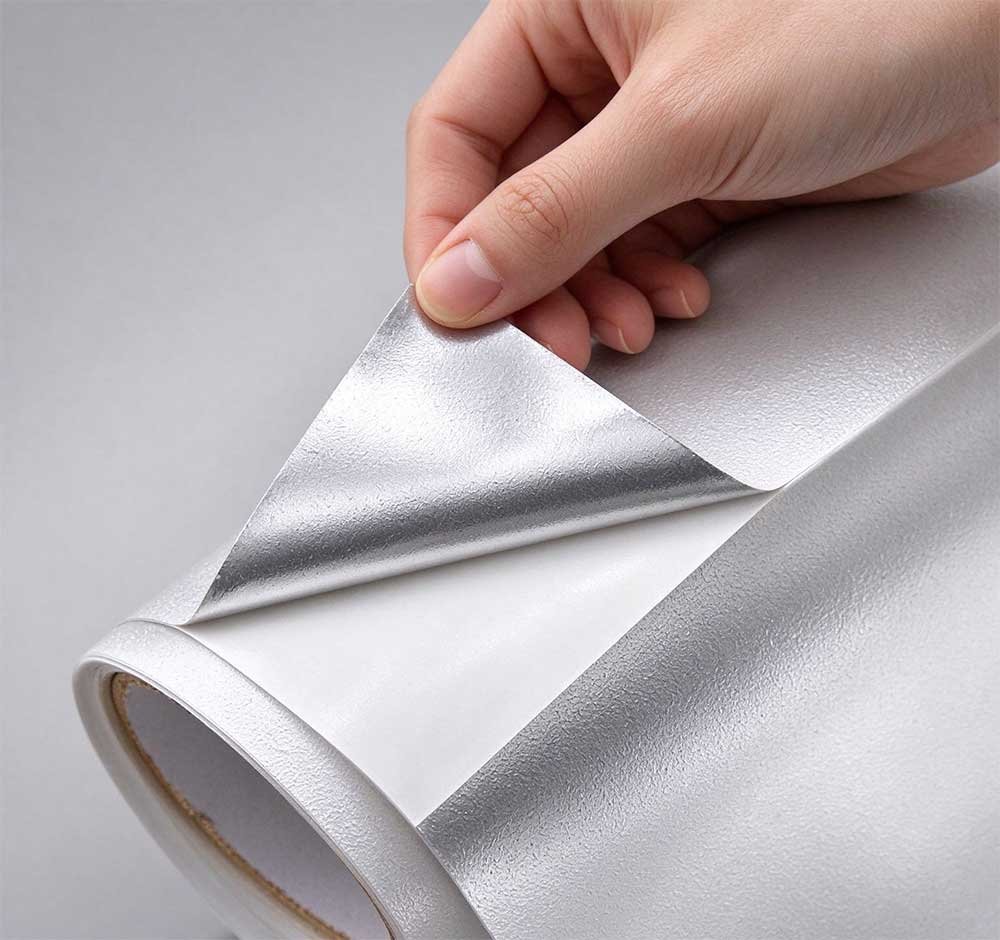
The foil carrier is soft enough to follow the run of asphalt and the rise of an uneven concrete wall, yet stiff enough to stay flat on a machine-laid kerb. Worked into the texture with a rubber mallet, it conforms to the base without lifting at the edges.

Because the surface is metallic and non-porous, the original texture of the substrate stays visible through the foil. A stepped kerb still reads as a kerb, a brick wall still reads as brick. The application improves grip without changing how the site looks.

Request Engineering Sample

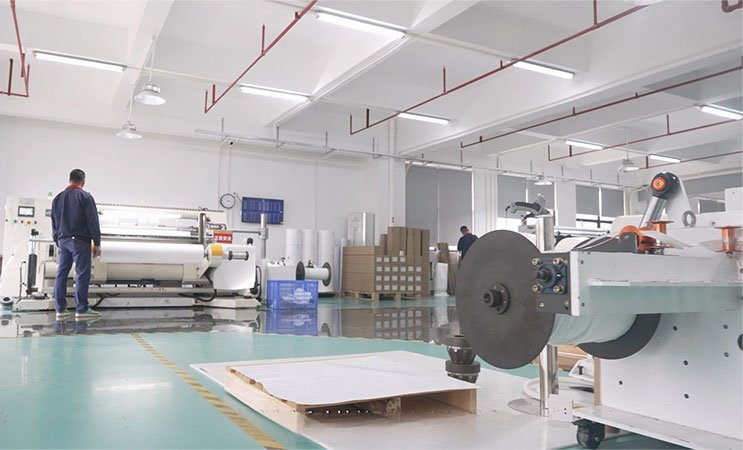
Foil laminate converting and coating line

Where Non Slip Strips for Outdoor Steps Are Used

Three application families, each with its own constraint on the construction.

Step nosing and kerbstone strip layout

Anti-slip Strips for Step Treads, Ramp Edges and Kerbstones

  • Strips are cut to the tread width, leaving a margin on each side, and set back from the nosing so the edge of the step stays visually defined.
  • The grit surface keeps working in the combination of wet film, road grit and oil that collects on a public step.
  • Kerbstones take the same strip cut to the stone width, with the ends butted together. Overlapping them would raise a seam across the walking line.

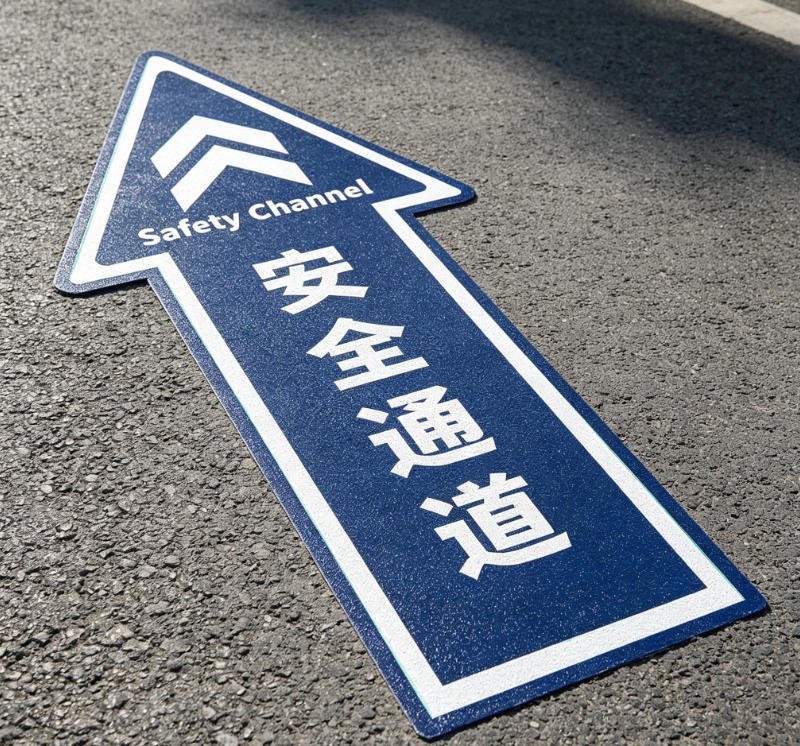
On uneven asphalt and rough masonry the foil follows the run of the base once it is tamped, so there is no lifted edge for a heel to catch. On kerbstone the same treatment doubles as a boundary marker, which is why this format is also used for navigation and advertising bands.

Printed foil surface for outdoor graphics

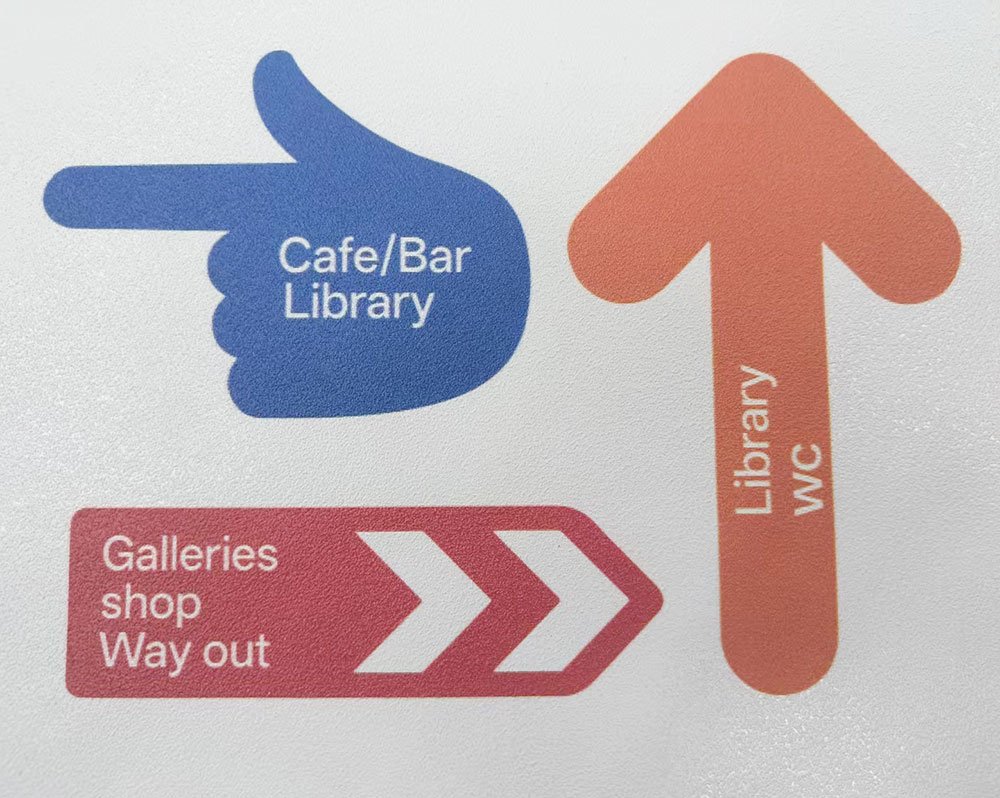
Anti-slip Strips for Long-Term Outdoor Graphics and Signage

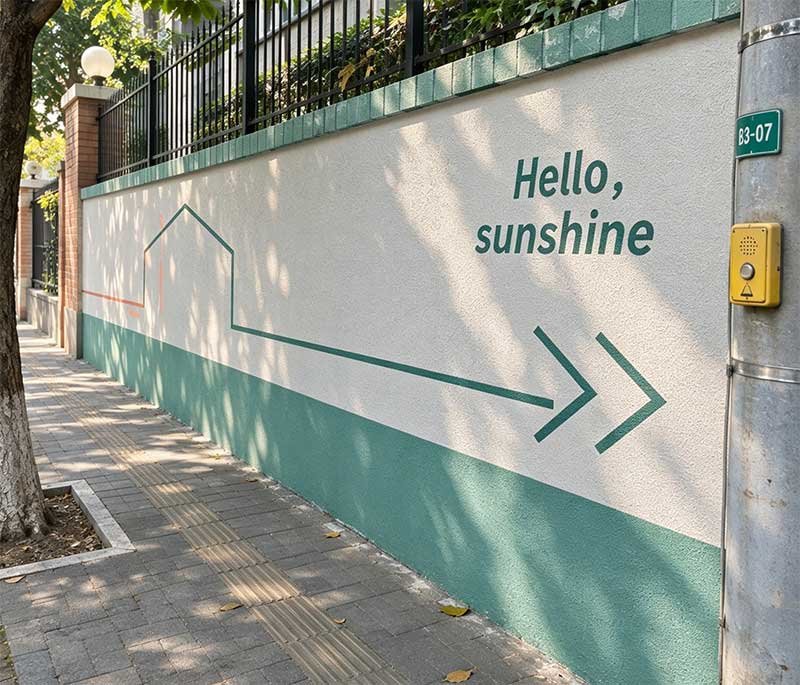
  • Murals, village renovation schemes, underpass beautification and civic campaigns need a surface that stays printable for years, not months.
  • The UV-photostabilised flat series carries a patented UV coating, print colour density and flame class B1 in the same construction.
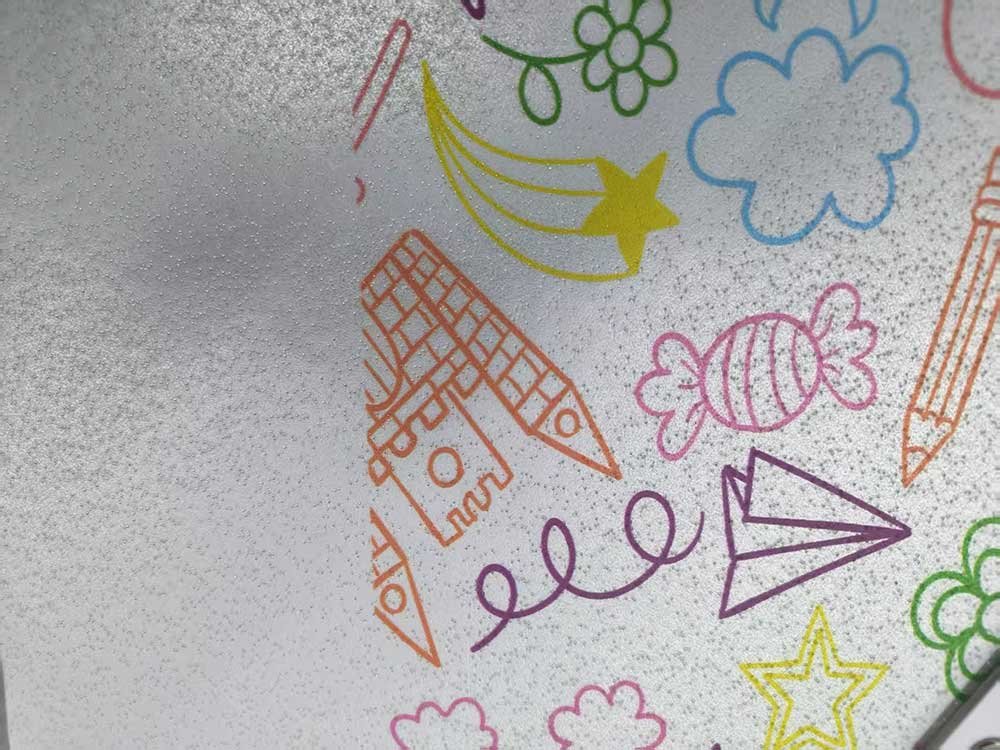
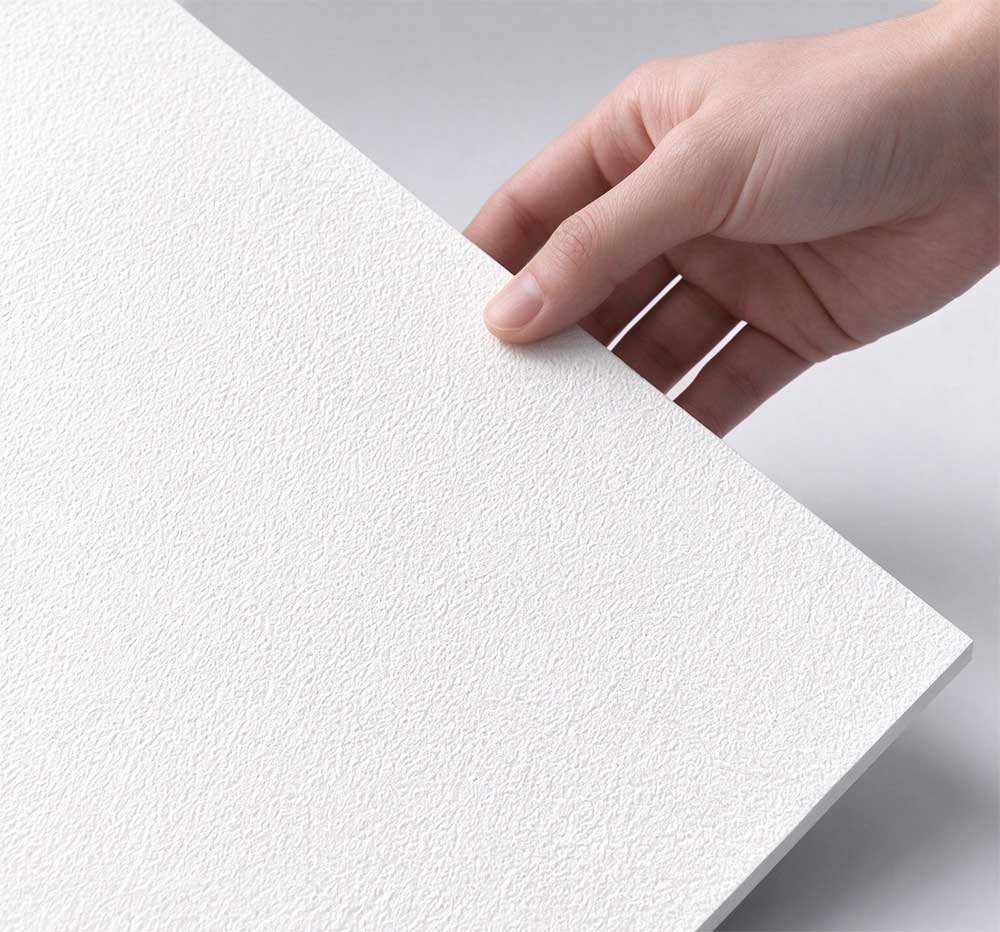
  • Ytl1246 is a high-opacity white that prints as clean matte; Ytl1247 reproduces the natural metal sheen, wipes clean and holds no fingerprints.

Traction and print quality pull in opposite directions. Grip comes from raised grit particles, while print needs a level surface. No single grade delivers both at full strength, so the range is split deliberately: grit grades for treads, flat grades wherever the image has to stay readable.

Foil Anti-slip Strips for Public Spaces

Foil Anti-slip Strips for Public Spaces and Transport Hubs

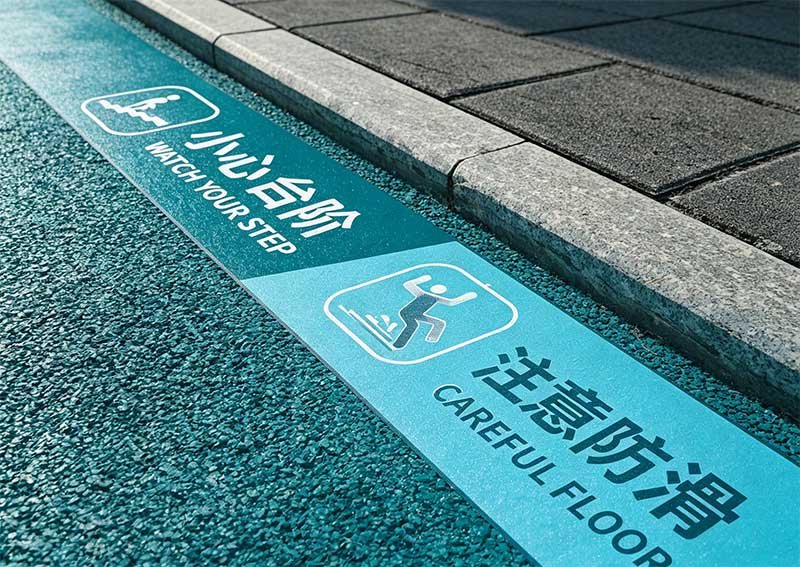
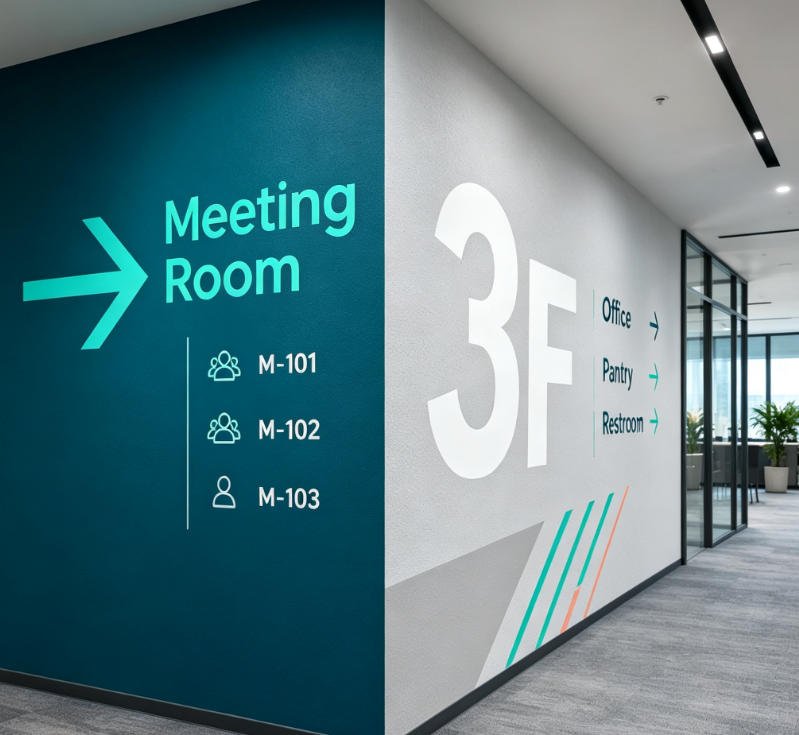
  • Navigation graphics and floor marking in stations, malls, hospitals and exhibition halls run under constant cleaning and heavy footfall.
  • Cleanability and wear resistance decide the grade here, and the slip class is matched to the footfall the floor actually carries.
  • Metal surfaces also deter fly-posting. An adhesive poster has no mechanical anchor on a dense foil face, so it lifts off in one sheet instead of tearing, which lowers the recurrence rate of urban graffiti where the area is cleaned on a schedule.
Foil Anti-slip Strips for Kerbstone Band

Kerbstone Band

Cut to the stone width, ends butted together and tamped at the joints.

The strip runs along the top of the kerbstone as a navigation or advertising band, in the same grit grade used on treads, so the marking itself also carries the slip resistance.

Foil Anti-slip Strips for Floor marking

Floor Marking

Navigation and warning zones in stations, malls and hospitals.

Station, mall and hospital floors are cleaned daily and carry heavy footfall, so the grade is chosen for how it wears under cleaning, with the slip class set to match the traffic the floor actually takes.

Foil Anti-slip Strips for Wall Repair

Wall Repair

The repaired base texture reads through the foil.

On rough masonry the film follows the run of the base, so a repaired wall keeps the texture of the original and does not read as a patch.

Foil Anti-slip Strips for fire signage

Bay Outline

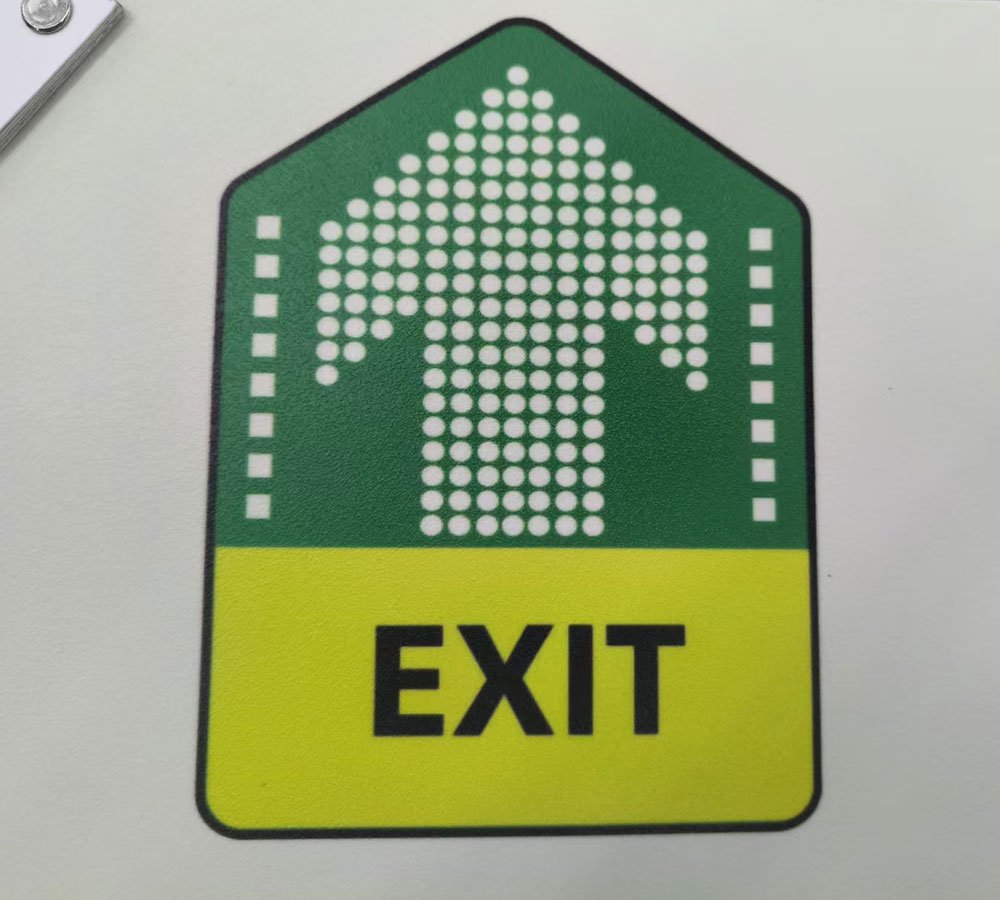
Vehicle and cycle bays, fire signage.

A flat grade is used where the outline has to stay readable, while a grit grade is specified on the walking side of the bay.

Why a metal face helps with urban surfaces. Foil is a dense, non-porous metal layer with no pores for adhesive to key into. A poster applied to a foil face has no mechanical anchor, so it lifts away in one sheet and leaves nothing to scrape. The same poster on porous masonry or brick is anchored deep in the texture and has to be scraped off, which is where most of the residue comes from.

Outdoor Anti-Slip Tape Grades

Four stocked constructions. Each one is a defined combination of carrier, grit grade and thickness.

Coarse grit surface texture sample

Coarse Grit

Highest wet grip, longest abrasion life.

Coarse, rugged surface texture. Specified on step treads, ramp edges, kerbstones and platform edges where the surface is walked on.

Medium grit surface texture sample

Medium Grit

Balanced grip and appearance.

Works for most public projects, where both a serviceable grip level and a presentable finish are needed on the same surface.

Fine grit surface texture sample

Fine Grit

Neat finish, moderate grip.

Suited to low-traffic zones and to areas where the appearance of the finished surface matters more than the grip level.

How the grade is verified. Slip resistance is tested to DIN 51130. Grade R13 is awarded when the coefficient of friction stays inside the R13 band under both dry and wet conditions. Grit size on its own is not a certification. A coarse grit that has polished smooth under traffic can drop below the band, so sample panels are pull-tested before approval.
Ytl2050 grit grade foil tape

Ytl2050 - Grit Grade Foil Tape, Heavy-Duty 600 - 800 μm

  • Carrier: forged aluminium foil; Top-coat: coarse grit, highest traction and best abrasion life of the range
  • Use on: step treads, ramp edges, kerbstones, platform edges and any zone that carries foot traffic
  • Thickness: 600 - 800 μm - selected where the film has to resist tearing as well as slipping
  • Notes: cut to tread width on site; tamp the strip flat with a rubber mallet, corners included
Ytl1050 grit grade foil tape

Ytl1050 - Grit Grade Foil Tape, General Grade 510 ± 40 μm

  • Carrier: forged aluminium foil; Top-coat: coarse grit
  • Use on: kerbstone navigation and advertising bands, floor marking, residual wall repair, pole and cabinet beautification
  • Thickness: 510 ± 40 μm - the standard choice where the surface carries marking, not load
  • Notes: once applied it reproduces the texture of the base closely enough to read as part of the original wall
Ytl1246 white and Ytl1247 silver flat foil tape

Ytl1246 White and Ytl1247 Silver - Flat Foil Tape for Printed Graphics

  • Ytl1246: anti-UV white coating with high opacity; prints as saturated matte white and accepts cutting and seaming for decorative work
  • Ytl1247: natural metal silver; a fine mirror tone that wipes clean and does not hold prints of fingerprints
  • Use on: murals, underpasses, village and old-town renovation, silver-finish decorative panels
  • Roll length: Ytl1246 is supplied at 1.27 m × 50 m; Ytl1247 at 1.27 m × 30 m
Ytl4117 sand-effect fabric tape

Ytl4117 - Sand-Effect Cloth Tape for Repair and Interior Use

  • Carrier: cloth with a sand-effect surface, softer and more flexible than the foil grades
  • Use on: whitewashed walls, cement block walls, brick walls, retail floor graphics and indoor decoration
  • Handling: can be folded, cut and washed, which suits curved or irregular surfaces that a rigid film will not follow
  • Note: this is a repair and decoration grade, not an exterior tread grade - do not specify it on step nosings

Technical Specification

Stock configuration for the outdoor grit grade series.

ParameterSpecification
ProductOutdoor weather-resistant anti-slip foil tape (grit grade series)
CarrierForged aluminium foil
Sheet size1.27 m × 30 m (4.17 ft × 98.4 ft); Ytl1246 in 1.27 m × 50 m
Width1.27 m standard width, slit to project width on request
Length30 m standard roll; roll length adjusted to consumption
AdhesiveClear high-tack, removable pressure-sensitive adhesive
Slip resistanceR13 to DIN 51130 - rated in both dry and wet conditions
Flame classB1 to GB 8624, equivalent to B-s1,d under EN 13501
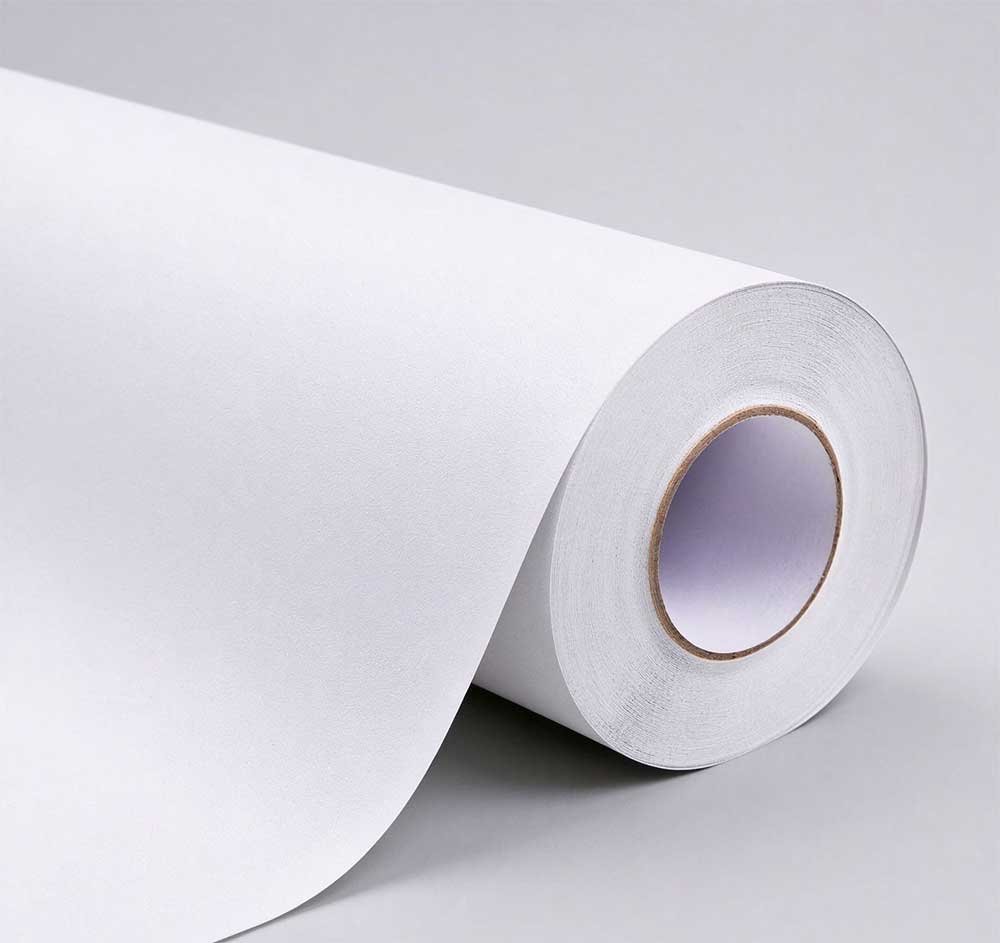
Release liner140 g double-coated liner, supplied as a fixed part of the structure
Thickness range510 ± 40 μm (Ytl1050); 540 ± 40 μm light duty and 600 - 800 μm heavy duty (Ytl2050)
PrintingSOL, LATEX, UV and ECO solvent compatible
TestingSGS certified, covering the six performance functions listed in the Test Results section below
Application methodDesign → print → position → clean the substrate → peel → apply → tamp with a rubber mallet, corners included
On roll supply and handling. The 140 g double-coated liner is not an optional extra. Its two-ply construction stops rolls bonding to each other in the carton and stops creasing during slitting and transport, which is what allows an outdoor roll to arrive and still be unrolled flat on site. Check on receipt that the material opens without a crease before installation starts.

How to Specify Outdoor Anti-Slip Tape

Five questions settle most enquiries before a sample is drawn.

1

Confirm the substrate

Rough concrete, brick, asphalt and rendered walls take the foil construction, which is soft enough to follow an uneven face. A smooth planed surface suits the flat grades. Where a flexible or washable finish is needed, the cloth grade is the option.

↓
2

Confirm the load

Treads and busy walkways are heavy-duty at 600 - 800 μm. Walls and light-traffic areas run at 540 ± 40 μm. Marking-only applications use 510 ± 40 μm. Film thickness governs tear resistance and cannot be substituted by a stronger adhesive.

↓
3

Confirm the climate

Service life is set by the local climate. High insolation needs a confirmed UV-resistant top-coat, coastal humidity needs mould and hydrolysis resistance, and freeze-thaw regions need low-temperature flexibility in the coating and the carrier. We ask for the site location and the intended service life before quoting.

↓
4

Confirm grip versus printed image

Grit surface for traction, flat surface for print. One product cannot deliver both at full performance, which is why the range splits into two product lines.

↓
5

Assign the product code and thickness

Only after the first four decisions can a grade be assigned. The resulting assignments are listed below.

Resulting assignments

  • Step treads and ramp edges - Ytl2050 heavy-duty 600 - 800 μm
  • Kerbstone marking - Ytl2050 / Ytl1050
  • General walls - Ytl2050 light-duty 540 ± 40 μm
  • Printed murals and signage - Ytl1246 / Ytl1247 flat

Custom Outdoor Anti-Slip Tape for Your Projects

  • Weathering grade: UV resistance and service life are adjusted to local solar load. A full-service weathering recipe and an ordinary outdoor recipe differ clearly in cost, so the working condition should be confirmed instead of accepting the highest grade by default.
  • Grit size: Coarse, medium or fine. Larger particles raise coat weight and abrasion life together, but the surface reads rougher. Projects that need both grip and appearance should settle both in the sample stage.
  • Thickness and width: Adjustable across 510 - 800 μm, with the Ytl2050 light and heavy duty bands held in stock. Non-standard widths are checked against coating line width capability.
  • Colour and finish: Grit grades in natural metal or metallic tones; flat grades in anti-UV white or silver. Outdoor projects should state the colour-retention requirement under long-term UV exposure.
  • Composite structure: Aluminium foil, PET and cloth carriers can be combined to suit hard, flat or flexible substrates.
  • Packing and logistics: Roll length matched to consumption. Long-haul outdoor shipments should use waterproof packing with project marks, and the roll should be checked for creasing before it is opened.
  • OEM and ODM: Full service from structural design and recipe sampling to serial production and delivery.
Anti-Slip Tape Production Equipment

Test Results and Reference Standards

The reports below cover the grit grade outdoor series.

Test itemResult
Slip resistanceR13
Flame performanceB1 to GB 8624
Water resistancePassed
Abrasion resistancePassed
Anti-bacterialPassed
Mould resistancePassed
Weathering resistancePassed
Test houseSGS
StandardWhat it covers
DIN 51130Classification of slip resistance for floor coverings. R13 is a high band, rated under both dry and wet conditions.
GB 8624Classification of reaction to fire for building materials. B1 corresponds to B-s1,d under EN 13501.
EN 13501Eurocode classification of reaction to fire, referenced against the B1 rating.
RoHSRestriction of hazardous substances in the construction of the coated structure.
ISO management systemsQuality management system requirements covering the coating and converting operations.
SGSThird-party testing body issuing the reports listed above.
A note on the adhesive. An outdoor adhesive has to satisfy two opposing demands at the same time: resist ultraviolet ageing, and resist hydrolysis in water vapour. It is easy to meet one by giving up the other, ending up with a bond that weathers but releases in the rain, or one that survives wet but chalks in sunlight. We therefore adjust the coating recipe and the coat weight together, so that adhesion, edge lift and clean removal hold together.

Why Buyers Specify Our Outdoor Anti-Slip Tape

Forged carrier under thermal cycling
The hardest working cycle outdoors is the day-night expansion and contraction of the substrate. Paper creases and cracks, PET whitens under pressure. Forged foil has a denser structure that resists flex-fatigue, and it carries a metal surface and an extension behaviour that neither paper nor plastic film can match.

Even grit distribution
Uniform particle density means friction is the same at every point on the step. A patch that has worn flat becomes a local low-friction point, and that is where slips start. The grit grades of this series give the most consistent wear behaviour and the best abrasion resistance of the range.

A clear line between traction and print
Grip depends on raised particles, printing depends on a level surface. Because the range is organised as a grit line and a flat line, a tread, a warning zone, a mural and an underpass can all be quoted from one supplier under one specification. For a public-sector or contractor framework that means a single test report, a single delivery route and a single point of accountability, with several material suppliers no longer quoting competing constructions.

Six performance functions in one structure
Water resistance, abrasion resistance, B1 flame class, anti-bacterial performance, R13 slip resistance and weathering resistance are integrated into the same laminate, with complete SGS documentation, so no separate material is needed to satisfy a single requirement.

Frequently Asked Questions

1. How is the Outdoor Anti-Slip Tape built up?

Four layers. The outer grit coating decides traction and weathering performance. Its particles have to be hard enough to survive grit and shoe abrasion, yet evenly distributed so that grip is consistent across the full width. Below it, the forged aluminium foil carrier gives the structure its shape and its resistance to flex-fatigue over uneven substrates. The third layer is the clear high-tack removable adhesive. It has to bond firmly, resist ultraviolet ageing and hydrolysis at the same time, and still release without leaving adhesive residue. The fourth is the 140 g double-coated liner, a fixed part of the structure that prevents blocking and creasing through slitting, transport and installation.

2. How do I choose a grade for my application?

Start with the substrate. Rough masonry, brick and asphalt take the foil construction, which is flexible enough to follow an uneven face. Smooth planed surfaces suit the flat grades. Where the finish has to flex or be washable, the cloth grade is the one to take. Then set the service intensity: step treads and busy walkways run at 600 - 800 μm, walls and light-traffic areas at 540 ± 40 μm, marking-only applications at 510 ± 40 μm. Finally decide whether traction or print quality takes priority, and confirm the climate conditions at the site.

3. What standards apply to non slip strips for outdoor steps?

Slip resistance is classified to DIN 51130, where R13 is a high band valid under dry and wet conditions. Reaction to fire is classified to GB 8624, with B1 corresponding to B-s1,d under EN 13501. RoHS applies to the construction, and the reports themselves are issued by SGS, covering slip resistance, abrasion, flame class, mould, water and anti-bacterial performance.

4. How long does the material last outdoors?

Service life is set by site conditions, not by a fixed number of years. Solar load, humidity, salt spray, freeze-thaw cycling and traffic density all contribute. The weathering grade can be matched to the location and the intended service life, but the sample should still be laid on the actual substrate and reviewed after a season of use before a large area is committed.

5. What is the lead time and sampling schedule?

Standard grades are held in production, so samples typically take three to five days and repeat production ten to fifteen. Custom weathering grades, grit sizes and thicknesses are sampled against the brief before serial production begins.