
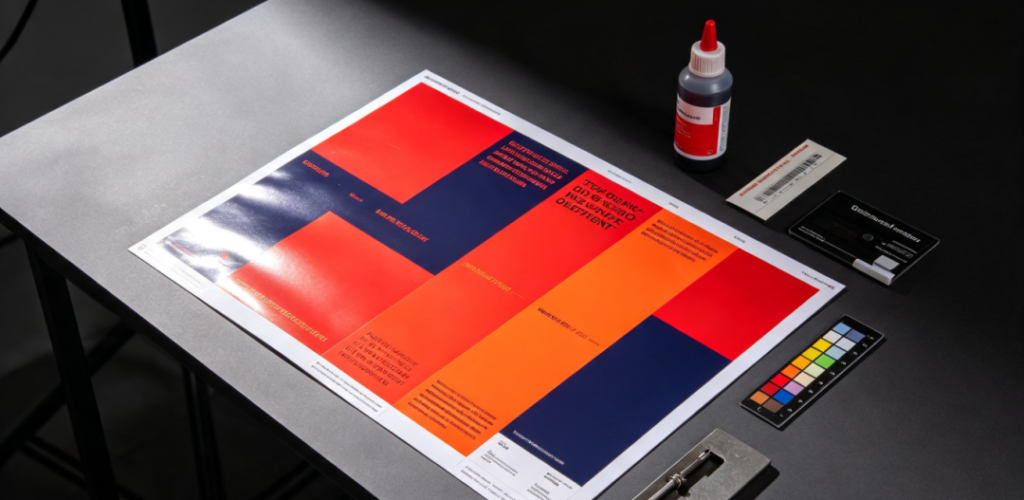
Ink has always been the key consumable in self-adhesive label printing. Ink selection and pressroom practice largely determine adhesion, color accuracy, and long-term durability of the finished label.
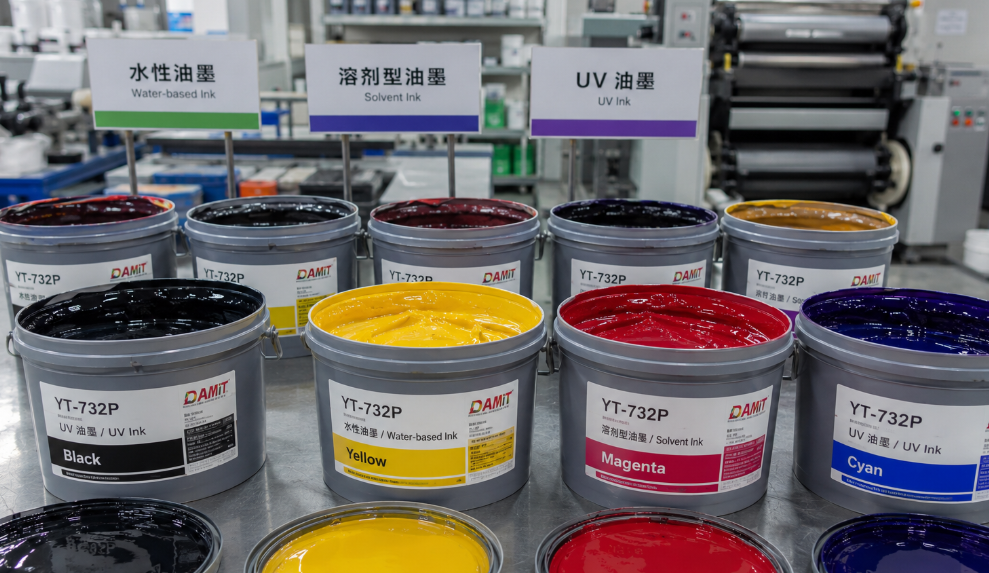
Today’s label inks fall into three main families — water-based, solvent-based, and UV-curable — each with a different drying mechanism, environmental profile, and suitable face stocks. In practice, however, a poor understanding of ink properties or inconsistent handling still causes most pressroom issues.
Here is what to watch for:
1. Mismatch between ink system and face stock
When print defects appear, most printers check ink conditions first. And the most common root cause is simple: the ink doesn’t suit the substrate.
Self-adhesive face stocks are generally paper, film, and metallized materials, and their requirements for wetting and adhesion are completely different. Whether ink wets out evenly and bonds well comes down to one thing — matching surface energy.
Polyolefin films such as PE and PP are a typical example. Their surface energy is inherently low, so corona treatment is required to raise the dyne level to 39-45 mN/m before printing. Without it, proper wetting is impossible.
Choosing ink on experience or price alone often leads to ink lift-off, color shift, and inconsistent quality. A sound choice has to balance ink chemistry, drying method, face stock, and press speed together.
Batch-to-batch consistency matters just as much. Even a slight variation between lots can cause a visible color shift, a higher Delta E (ΔE), and longer makeready time. Tight QC on incoming ink, with routine drawdowns and hue checks, is the only way to hold color stable across long runs.
2. Poor control of UV curing energy
Thanks to bright color, high gloss, good water, chemical and abrasion resistance, and instant cure, UV ink now accounts for a large share of label printing. That advantage, however, depends on precise energy control.
UV ink dries by polymerization — UV light crosslinks the monomers in the vehicle into a solid film. With insufficient dose, the surface may feel dry while the bottom layer remains under-cured. That under-cured layer bonds poorly to the substrate and will flake or peel during converting and transport. Too much energy is no better: over-cure makes the film brittle and prone to cracking and loss of adhesion.
Ink film weight, web speed, lamp power, and lamp degradation all affect the cure result.
The practical fix is to link curing energy to press parameters — measure UV lamp output regularly, and adjust dose dynamically to film thickness and line speed to ensure a full through-cure and lasting adhesion.
3. Poor storage and pressroom handling
Many ink failures start not on press, but on the shelf.
Left standing, water-based inks tend to settle and separate. Solvent-based inks left open lose solvent and steadily gain viscosity. Since viscosity controls transfer and drying rate, any drift will quickly show up as plate dry-up, ink piling, or misting, and press stability suffers.
What works is basic discipline: store ink in a temperature- and humidity-controlled area, rotate stock on a first-in, first-out basis, and check and adjust viscosity before every job to match press speed and image coverage.
Back that up with a simple, ongoing ink log — check ink condition on schedule, catch press issues early, and keep maintenance preventive rather than reactive.