
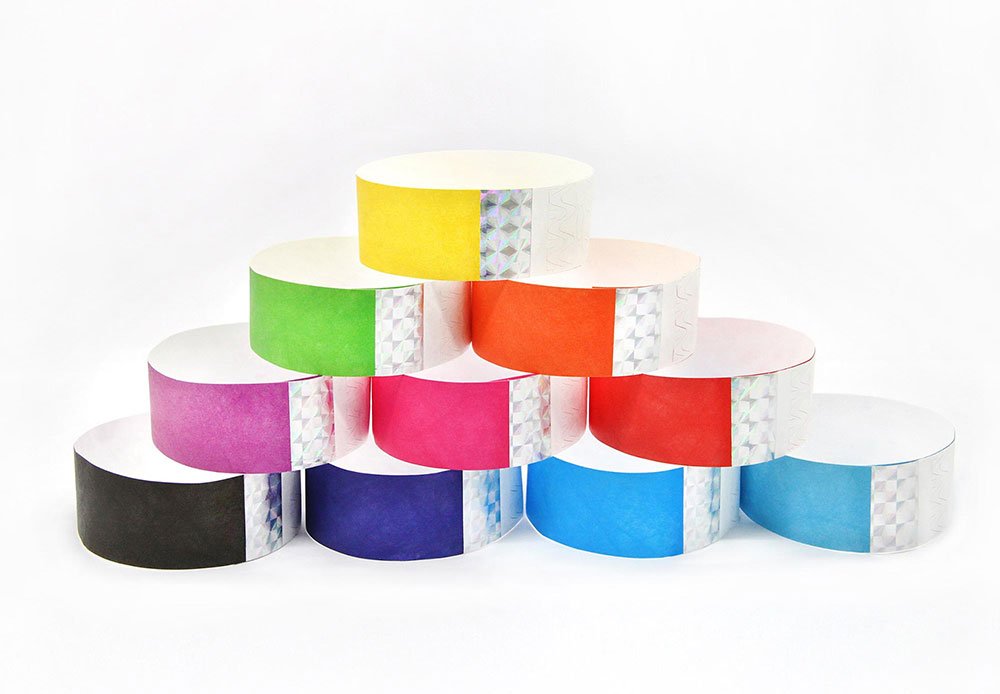
Printable wristband sheets are a practical solution for on-demand identity management, access control, and visitor tracking. They are designed for standard office printers and help buyers reduce inventory pressure while improving customization flexibility.
Quick summary: This article explains what wristband sheets are, how they differ from pre-printed wristbands, the main material and printer compatibility options, and the typical B2B use cases for manufacturers, distributors, and event suppliers.
To better understand why this product matters in professional use, it is helpful to start with a clear definition of wristband sheets. Before comparing materials and printing methods, let us first explain what wristband sheets actually are.
What Are Wristband Sheets?
Wristband sheets are printable sheet-format wristband materials that allow users to produce disposable wristbands in-house. Each sheet typically contains multiple wristband units and is designed for fast, variable-data printing such as names, serial numbers, barcodes, and QR codes.
From a manufacturing and procurement perspective, wristband sheets are a flexible base material for short-run customization, point-of-use printing, and lower-stock workflows.
Once the basic concept is clear, the next question is how wristband sheets differ from pre-printed wristbands.
After understanding the product format, buyers usually want to know whether sheet-based printing is more suitable than pre-printed stock.
Wristband Sheets vs Pre-Printed Wristbands
Wristband sheets offer greater customization flexibility because the final data is printed when needed. This reduces the need to hold multiple finished wristband SKUs in inventory. In contrast, pre-printed wristbands are better suited to fixed designs and standardized bulk programs.
- More flexible for variable data printing
- Lower inventory risk
- Faster on-site issue for events and admissions
- Suitable for mixed designs and short production runs
With the format difference established, the next decision point is material selection.
After evaluating the advantages of sheet-based printing, it is important to look at the available material options.
By Material
Tyvek Wristband Sheets: Tyvek is the mainstream choice for disposable printable wristband. It offers a paper-like feel, strong tear resistance, and dependable water resistance, making it suitable for events, admissions, and healthcare workflows.
Synthetic Paper Wristband Sheets: Synthetic paper provides a smoother printable surface and strong image clarity. It is often selected for projects that need cleaner typography, sharper barcodes, and enhanced resistance to moisture and daily wear.
Vinyl / Plastic Printable Wristband Sheets: Vinyl and plastic printable wristband sheets are used when buyers need a more durable and premium-feel solution. They are well suited to longer wear cycles and controlled-access environments.
Paper Disposable Wristband Sheets: Paper disposable wristband are a cost-efficient choice for short-term use. They are ideal for low-budget programs, school activities, temporary events, and high-turnover visitor management.
Material choice is only one part of the decision; printer compatibility is equally important for successful in-house production. Once the material is selected, buyers should confirm which printing method best matches their workflow.
By Printer Compatibility
Laser Printable Wristband Sheets: Laser printable wristband sheets are the most common option for business buyers because they support fast output, crisp text, and strong compatibility with standard office printers.
Inkjet Printable Wristband Sheets: Inkjet printable wristband sheets are suitable for buyers that prioritize color-rich graphics and lower-volume customization. They are useful for branded events and visual-heavy layouts.
Thermal Printable Wristband Sheets: Thermal printable wristband sheets are available for specialized workflows that use thermal systems or require simplified variable-data output in controlled environments.
After selecting the printing method, the next consideration is sheet size and user group.
Printing compatibility determines output quality, while size determines how well the product fits the intended audience and application.
By Size and Application
- Adult wristband sheets for standard event and access-control use
- Kids / children wristband sheets for schools, camps, and family attractions
- A4 wristband sheets for international printing workflows
- US Letter wristband sheets for North American office environments
Beyond material and size, buyers often need additional functional features to match real-world operating conditions. Once the layout is fixed, feature enhancement becomes the next layer of product selection.
By Feature
Waterproof Wristband Sheets: Waterproof wristband sheets are suitable for outdoor use, sweaty environments, and applications where occasional moisture exposure is expected.
Tamper-Evident Wristband Sheets: Tamper-evident wristband sheets are designed to prevent reuse or transfer. Once removed or damaged, the wristband cannot be re-applied, making it suitable for security-sensitive workflows.
Self-Laminating Wristband Sheets: Self-laminating wristband sheets include a protective overlay that helps preserve print quality and improve wear durability over longer usage periods.
Standard Product Specifications
- Sheet size: A4 (210 × 297 mm) / US Letter
- Wristbands per sheet: Adult 10–13 pieces; children up to 17 pieces
- Color options: White, yellow, red, blue, green, pink, and other solid colors
- Printing support: Laser as the mainstream option, with selected inkjet and thermal formats available
- Core functions: Disposable, tamper-evident, waterproof, wear-resistant, and variable-data printable
How to Choose the Right Wristband Sheet
When selecting wristband sheets, buyers should confirm printer type, desired wear duration, material preference, user group, sheet size, and whether tamper-evident or waterproof performance is required.
As a manufacturer, we support OEM and ODM customization for sheet layout, material, color, packaging, logos, serial numbers, barcodes, and QR codes.
Share your material, size, printer type, and target application. We will support you from sample preparation to bulk production.